Author Archives: mark tindle
We’re not the only ones who remember
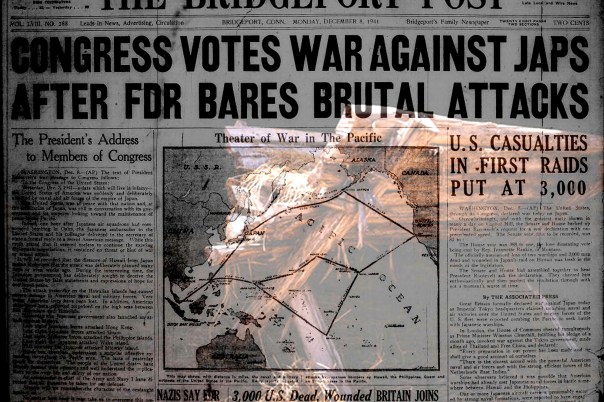
December 7th is a day that America remembers. It was on this day in 1941 that the Pacific fleet was attacked in Pearl Harbor, thrusting our country into World War 2 at the cost of a half million US lives. But we’re not the only ones who remember.
There’s a little story tucked away in the beginning of Luke’s gospel that is rich in remembering. A messenger appears to Zechariah and informs him that he and his elderly wife are finally going to have a baby. This baby will be named John, and he will “be a joy and delight to you.”
This announcement is drenched in God’s remembering. For starters, compare the message to Zechariah and a message centuries earlier to Abraham:
Your wife Elizabeth will bear you a son, and you are to call him John. (Luke 1:13)
Your wife Sarah will bear you a son, and you will call him Isaac. (Genesis 17:19)
The message to Abraham was the beginning of God’s actions to bless the world through Abraham’s descendants. That promise is remembered in front of Zechariah.
Then there’s the statement that John would go on in “the spirit and power of Elijah, to turn the hearts of the parents to their children.” (Luke 1:17) God’s last prophet in the Old Testament was Malachi. And the last words that Malachi records are:
See, I will send the prophet Elijah to you before that great and dreadful day of the Lord comes. He will turn the hearts of the parents to their children, and the hearts of the children to their parents;
God was remembering his promises through the prophets. And John was going to continue the tradition of the prophets and prepare the way for the Messiah.
Oh, and did I mention the guy who got this message from the angel, his name (Zechariah) means, “God remembers.”
Coincidence? I don’t think so. God remembers. He remembers every promise he ever made to you.
-Pastor Mark
P.S. Speaking of remembering, if you got a copy of the Advent devotional last Sunday, remember to check it out each day for a quick section to read and something to think about. And then remember there are family experiences and projects to choose from if you’re doing this as a family or small group. If you missed last Sunday, be sure to pick up your copy this Sunday, or you can get a PDF version online by clicking here.
Make December better this year
 Wanna make this a better December? One that helps you get past the rush and hustle of shopping and traveling? We’ve got an idea.
This weekend we’re making a free resource available for individuals and families. It’s an Advent devotional guide. It includes the following:
- Daily Bible reading guide
- Short devotional to help focus your life
- Weekly ideas for families like fun projects and creative suggestions
- Ideas for small groups for discussion starters and more
Or if you prefer, you can walk use this resource on your own.
I’ll pull one or two sections of each week to focus on in this blog as a way to foster ongoing conversation.
If you want to participate, simply pick up a copy this Sunday morning after any of the three gatherings. The readings start on December 3rd, so you won’t miss anything.
And together we’ll make this December one of good conversations, great memories and better experiences walking with the Prince of Peace.
-Pastor Mark
Can you believe what the President proclaimed?

When the President of the United States speaks, people notice. That can be good or bad, depending on the nature of the President’s comments. Today is a good day to remember one particular presidential proclamation.
You need to understand the context of these comments. They’re given during a time when the nation is embroiled in an unpopular war, when there’s considerable conflict within our borders concerning matters of racial justice. Despite national economic success, there is cause for concern in many homes and families.
In response, the President, while pointing out the good and bad situations facing the nation, offered this proclamation:
“I do therefore invite my fellow-citizens in every part of the United States, to set apart and observe the last Thursday of November as a day of thanksgiving and praise to our beneficent Father who dwells in the heavens. And I recommend to them that while offering up the ascriptions [i.e. credit] justly due to Him for such blessings they do also, with humble penitence for our national perverseness and disobedience, commend to His tender care all those who have become widows, orphans, mourners, or sufferers in the lamentable civil strife in which we are unavoidably engaged, and fervently implore the intervention of the Almighty hand to heal the wounds of the nation and to restore it, as soon as may be consistent with the divine purposes, to the full enjoyment of peace, harmony, tranquility, and union.”
Impressive. Proclaiming thanks for God’s blessings, and penitence for our brokenness. And the fervent prayer for God to heal our wounds and provide peace for our land. Pretty insightful comments, considering there were offered in 1863 by President Abraham Lincoln, fully 154 years ago. This sounds like a great way to approach Thanksgiving this year for all of us.
As for me, I’m thankful to God for many things, not least of which is each one of you who are (or have been) part of Seneca Creek. Being your pastor is one of God’s greatest blessings. Enjoy this holiday, and continue proclaiming gratitude to our wildly generous God.
-Pastor Mark
Who is the God behind your green curtain?

In the classic scene from The Wizard of Oz, the green curtain is pulled back to Toto to reveal that it wasn’t actually a “great and mighty Oz, but something far less powerful and potent. Sometimes there’s a green curtain that needs to be pulled back to reveal our god. (link to blog here)
In his book, Free of Charge, Miroslav Volf describes the little man who is sometimes behind the green curtain of our theology. It’s either the Great Negotiator, or Santa Claus.
The Great Negotiator is the God we try to bargain with.
“I’ll do this [insert your favorite “favor” you offer God here] for you, God,
if you’ll do that [insert whatever it is you need from God at the moment here] for me.”
The main problem is that we have nothing to offer God that he needs. So it’s not really a negotiation. “God, I’ll give you something you already have and you’ll give me something I need.” Besides, if God doesn’t uphold his end of the deal, there’s no way to enforce it.
The Santa Claus God is the one who gives indiscriminately to everyone with no expectation or strings attached. The main problem with this is that God seems to have expectations. “Do this, or don’t do that.”
As Volf points out, “God generously gives, so God is not a negotiator of absolute dimensions. God demands, so God not an infinite Santa Claus… [A] Santa Claus God gives simply so we can have and enjoy things; the true God gives so we can become joyful givers and not just self-absorbed receivers. God the giver has made us to be givers and obliges us therefore to give.”
We’re tempted to follow the Great Negotiator, or Santa Claus. But a better choice is the picture that emerges from the pages of the Bible. God is the Creator who creates and gives good gifts, and also the Redeemer who steps in when we fail to meet the demands of living as image bearers of our generous God.
Who’s behind your green curtain?
-Pastor Mark
Dying in comfort
 There’s an old adage that says the job of a preacher is, “To comfort the disturbed and disturb the comfortable.” Here’s the challenge with that.
We like to be comfortable. We like to be comforted.
We’re not so excited about being disturbed.
If you stick around long enough, though, I’m going to disturb you. Quite possibly on purpose. Not to annoy you, but to spur you on to love and good deeds. Check out Hebrews 10:25
And let us consider how we may spur one another on toward love and good deeds,
There are a number of ways this might happen:
- It may happen when I teach/preach about something you’re not wanting to hear. (Pick your favorite topic that you and God don’t see eye-to-eye on: money, forgiveness, lust, greed, etc.)
- It may happen when I don’t agree with you about some issue, or topic, or candidate, or theological debate. (The options are almost limitless.)
- It may happen when I don’t do or say the things that you think a pastor should do for you.
- It may happen when I ask you to “prayerfully consider” stepping into a serving role.
- It may happen when I invite you to be generous with your time, talents, or treasures.
But rest assured, my goal is your good. I want the best for you. Even when that means disturbing your comfort. Because if we’re left unchallenged in our comfortable places, we will not grow. We will not become more like the people we were created to be. We will not become more fully human. On the contrary, we will become less human, less fully alive, and less fruitful. In short, our comfort zone is a place of death, not life.
And in case you’re wondering, I regularly get dragged out of my comfort zone by other leaders inside and outside Seneca Creek. And I’m glad (sort of) for that, because even though it’s uncomfortable, it’s the pathway to growth and life.
Let’s journey together on this wonderful, often uncomfortable path of following Jesus. And becoming more fully alive.
-Pastor Mark
P.S. If I haven’t made you uncomfortable prior to this, I’ve probably done so in this blog. I hope it spurs you on toward God’s best.
They said it couldn’t be done

The challenge was to build a railroad bridge across the great Niagara Gorge. “It can’t be done!” In 1851, James Roebling thought otherwise.
Despite overwhelming challenges (like an 850 foot span over a 200 foot drop off), and despite being labeled as “out of his mind,” in just four years Roebling accomplished what was thought impossible. His bridge supported the weight of a fully loaded locomotive pulling freight and passengers.
Stop for a moment and let the challenge sink in. How would you start to build across a canyon that was almost three football fields wide? Well it started very small. In fact, it began with a game. Roebling’s predecessor, Charles Ellet, offered a five dollar reward to the first boy who could fly a kite over the Niagara gorge. It took two windy days, but finally a boy succeeded. Then his kite string was attached to a larger string, which was attached to a small rope, which was attached to a larger rope, which was attached to a small cable, and so on.
It started with a kite string.
When we think about building bridges to those around us, perhaps even those who are different than us, or those whom we have learned not to trust, it often starts with a kite string.
- It’s a sincere prayer.
- It’s a gracious word.
- It’s a simple gesture of kindness.
- It’s an invitation to a conversation.
- It’s a shared cup of coffee or a meal.
What seems like an unbridgeable gorge between people can be crossed if we’re willing to start with a kite. Flying kites is not hard. Neither are the ideas above.
Some are saying it can’t be done. That we can’t build bridges to the “other.” And yet the story of the gospel is exactly that: a story of God building a bridge to us. (If you missed last Sunday, check out the message here.)
Roebling believed it could be done. Jesus proved it can be done.
It’s our turn. Be sure to join us this weekend for “Building Bridges to the Stranger.”
Now go fly a kite!
-Pastor Mark
When Halloween candy turns into meat

The question comes up every year around this time. How should followers of Jesus deal with this thing called Halloween?
You’re still reading, so you have some interest. But chances are you don’t want to read 5,000 words, so permit me to offer a short response.
Halloween (or, “Hallowed Evening” as it was originally) was celebrated in parts of Europe in anticipation of All Saints Day (November 1st), a time to remember saints and martyrs of the Christian faith. Some historians connect this celebration to pre-Christian, pagan rituals of honoring the dead and appeasing their departed spirits. If you dig deep enough you’ll find spooky, scary and downright evil stuff.
Fast forward to 2017. We not only don’t celebrate All Saints Day, most people don’t even know any saints. Or martyrs. Furthermore, we’re completely ignorant of ancient Celtic and Gaelic pagan rituals and beliefs. Halloween is about crazy costumes and copious amounts of candy. Period.
Which brings me to the meat part. Because in the early church there was a massive dispute about what kinds of meat could be eaten by Christians. You see it was common for pagans to offer meat to the idols of their religions. That meat was later sold in the local market at a reduced price.
Some Christians, particularly those who used to be part of those pagan religions, felt that this meat was polluted, and should not be eaten. In their minds, to eat that meat was to participate again in their old religious practices. But for others, they simply saw it as good, cheap meat. Since they had never believed in the pagan gods, they didn’t see the problem. They didn’t believe those gods were real, so there was no way they could affect the meat. Bon appétit!
Two very different views, often in the same church. And each group looked at the other and wondered, “what’s your PROBLEM?”
So Paul writes to these people with the following advice:
[Romans 14:1-22]
Accept the one whose faith is weak, without quarreling over disputable matters. 2 One person’s faith allows them to eat anything, but another, whose faith is weak, eats only vegetables. 3 The one who eats everything must not treat with contempt the one who does not, and the one who does not eat everything must not judge the one who does, for God has accepted them. 4 Who are you to judge someone else’s servant?To their own master, servants stand or fall. And they will stand, for the Lord is able to make them stand.
10 You, then, why do you judge your brother or sister[a]? Or why do you treat them with contempt? For we will all stand before God’s judgment seat.
12 So then, each of us will give an account of ourselves to God.
13 Therefore let us stop passing judgment on one another. Instead, make up your mind not to put any stumbling block or obstacle in the way of a brother or sister. 14 I am convinced, being fully persuaded in the Lord Jesus, that nothing is unclean in itself. But if anyone regards something as unclean, then for that person it is unclean. 15 If your brother or sister is distressed because of what you eat, you are no longer acting in love.Do not by your eating destroy someone for whom Christ died.16 Therefore do not let what you know is good be spoken of as evil. 17 For the kingdom of God is not a matter of eating and drinking, but of righteousness, peace and joy in the Holy Spirit, 18 because anyone who serves Christ in this way is pleasing to God and receives human approval.
19 Let us therefore make every effort to do what leads to peace and to mutual edification. 20 Do not destroy the work of God for the sake of food. All food is clean, but it is wrong for a person to eat anything that causes someone else to stumble. 21 It is better not to eat meat or drink wine or to do anything else that will cause your brother or sister to fall.
22 So whatever you believe about these things keep between yourself and God. Blessed is the one who does not condemn himself by what he approves. 23 But whoever has doubts is condemned if they eat, because their eating is not from faith; and everything that does not come from faith is sin.
Our issue isn’t meat offered to idols. It’s a holiday called Halloween. Our “meat” is represented in the Halloween candy and costumes. Some principles to gather from Paul:
-
Accept one another, even with our differences
-
Respect those who differ with you on these matters
-
Don’t judge one another, or treat with contempt
-
Don’t let your actions cause someone to act in violation of their own beliefs
-
Act with love toward one another
-
Remember that the bigger picture is not Halloween, but the kingdom of God
Additionally, I would point out that some of the activities that surround Halloween are a celebration and/or representation of dark spiritual forces (demons, devils, etc.). There really is a spiritual enemy of God (satan), and he would like nothing better than for us to be deceived into thinking he doesn’t exist. That’s something to keep in mind. Here’s a helpful reminder from C.S. Lewis in his Screwtape Letters:
There are two equal and opposite errors into which our race can fall about the devils. One is to disbelieve in their existence. The other is to believe, and to feel an excessive and unhealthy interest in them. They themselves are equally please by both errors…
May this season be filled with joy, respect, understanding, and even some candy.
-Pastor Mark
Fixing the bugs in our faith

My smart phone is always wanting to update its apps. And when I try to find out what the update includes, the most common reason is this:
Bug fixes.
In other words, the app developer has discovered that something isn’t playing nicely with other things on the phone. Something is not running smoothly. So the app needs a little tweaking, and a little adjusting.
Which sounds a lot like our faith. We start out with certain beliefs about God/life/faith, then discover that our beliefs don’t play nicely with other people, or their beliefs. Or they don’t play nicely with the world as we understand it. Or with life as we’re experiencing it. We’ve got bugs in our faith. So we need an update.
What happens Sunday after Sunday at Seneca Creek is a bit like an app update. We focus on God’s character, his truth, and his purposes and plans for our lives. By doing this, we add the skills needed to address those areas of life that aren’t playing nicely with our faith, or our understanding of God. We rewrite the code that is at the core of our faith. And that gives us an update, if you will. It’s a system of “bug fixes.”
Given our limited understanding of God, and the challenges we face week after week, it’s no surprise that God encourages us to gather regularly.
And let us consider how we may spur one another on toward love and good deeds, not giving up meeting together, as some are in the habit of doing, but encouraging one another—and all the more as you see the Day approaching.
(Hebrews 10:24-25)
I’d like to encourage you to keep you faith app updated. If you’re unable to join us on the weekend, be sure to check out the podcast here. And if there’s a bug that you would like to have us address, be sure to let me know.
I look forward to updating our apps together soon.
-Pastor Mark
P.S. If you have an interest in our 2018 mission trip to Tanzania, Africa, mark your calendars for October 29th or November 5th at 1:00 pm. We’ll share all the details and information at those informal meetings.
Labels lie

Have you ever been labeled? Did you want to scream, “That’s not who I am!”? That’s the problem with labels. They don’t tell the whole truth. Sometimes they don’t tell the truth at all.
Several years ago an organization called POTSC (People of the Second Chance) launched a campaign with the title, “Labels Lie.” Boy do they ever.
Recently I heard about a label someone attached to Seneca Creek. “That’s a __________ church.” I chafed (fumed, actually), knowing that the person who used the label was ignorant about its meaning, but worse, was ignorant about Seneca Creek! I won’t share the label, because I don’t want to spread lies.
But it reminded me that we are all tempted to use labels. We use them for people who think differently, act differently, dress differently, speak differently, vote differently, and look differently than us. One of the most frustrating aspects of our current national discourse is the use of labels. Racist. White supremacist. Anarchist. Revisionist. Nationalist. Immigrant. (the list is endless)
Here’s my question: Has the use of labels ever brought people together? Has it ever advanced the conversation? Has it ever deepened our understanding of one another? Has it ever provided a way forward in a divided nation or community? No it has not. Labels are impotent at best and destructive at worst.
What HAS helped, however, is setting aside labels and sitting down to listen and learn. It IS possible to learn from people you disagree with. And along the way it’s possible THEY will learn from you.
So here’s my challenge. Find someone who you’re tempted to label, and invite them to sit down for coffee (or whatever your beverage of choice is). Then ask them how they came to hold the views and opinions and beliefs about which you disagree. And listen. And learn.
When I’ve done this, here’s what I’ve learned.
- You might find out that you have more in common than you thought.
- You might find a next step forward in resolving differences.
- You might find a way to respectfully disagree without demonizing the other.
- But what you WILL find for sure is that the label you were tempted to use is simply not going to be sufficient.
Because labels lie. And that’s something worth learning. Over and over.
-Pastor Mark
 Living in faith, hope and Love