Author Archives: mark tindle
We seem to have a parenting problem
 Sometimes my wife and I discuss the challenges faced by teachers in the classroom and conclude that certain children are “parentally challenged.” IOW, Mom and/or Dad are not holding up their end of the bargain.
The term “under-parented” has also been used in some circles. Maybe you’ve used it. Maybe you feel like YOU have been under-parented. Or maybe you’ve had to deal with people who were clearly “under-parented.”
But this is not a blog to heap guilt on parents or to point fingers. This is about another kind of parenting. It’s about the parenting of our Heavenly Father.
For those who claim to follow Jesus, we understand that we are “children of God.” (John 1:12) We address God as “Our Father…” (Matthew 6:13) We proclaim we are his “sons and daughters.” Then we venture into the world (real or cyber) and live our lives.
- We carry on business and commerce
- We engage in conversations and debates
- We talk about other people, in real life and online
- We make decisions about our bodies, and the bodies of others
- We make assumptions about the motives and value and intellect of others
- We choose how to behave toward those who are different from us
We do all these things and more, often unaware that the world is watching. They’re watching the children of our Heavenly Father.
And they’re drawing conclusions about what kind of parent God is based on the behavior of his children.
Sometimes their conclusion is that God’s children are under-parented. That they’re “parentally challenged.” Nothing could be further from the truth, of course. It’s not the parent that’s the problem. Our Heavenly Father has been kind, loving, clear, firm, gracious, honest, sacrificial, and more. He has provided encouragement and opportunities and boundaries and consequences.
The question for us, his children, is this: Are we reflecting the nature of our Heavenly Father in our lives? Will his name be “hallowed” thru our decisions? Jesus put it this way:
But love your enemies, do good to them, and lend to them without expecting to get anything back. Then your reward will be great, and you will be children of the Most High, because he is kind to the ungrateful and wicked. (Luke 6:35)
If there’s a parenting problem, it’s that the children are too often unwilling to listen to their Father. May it not be said of us.
-Pastor Mark
When is the best time to stop learning?

School’s back in session in our region. Busses are rolling, teachers are prepped and ready, all so the students can continue learning. But when does it stop?
Back to school season is a great time for all of us to pause and ponder this question: When should we stop learning? Does learning end when you receive your diploma? Does it end when you settle down to raise a family? When you reach middle age? When you retire?
The question might sound silly but what’s even sillier is that we can miss out on opportunities to actually help us grow. Your employer might send you for the latest certification, or your job might require you to accumulate continuing education credits. But beyond that, what can you to do keep learning?
May I suggest Rooted? It’s an opportunity to learn the way most of us learn best, not by LISTENING but by DOING. It’s not for nothing that it’s called the “Rooted Experience.” You’ll learn how to connect better with God, with your church family, and with your God-given purpose.
If you’ve already taken Rooted, may I ask you to encourage a friend to follow in your footsteps? Share with them the impact it had on your life.
If you’ve NOT already taken Rooted, may I encourage you to register for the Fall session? (Click HERE to register.) It starts next Tuesday, September 12th at 7 pm. I promise you it will kick-start your learning. And you’ll never be the same because of it. (Check out what others have said after taking Rooted here.)
I hope to see many of you there. And regardless of your Rooted engagement this Fall, this is not the time to stop learning. In the words of another preacher, “If you ain’t dead, you ain’t done.”
-Pastor Mark
P.S. If you missed last weekend we talked about the role of the Holy Spirit in helping us learn. Check out the podcast HERE.
Two opportunities to know about right now
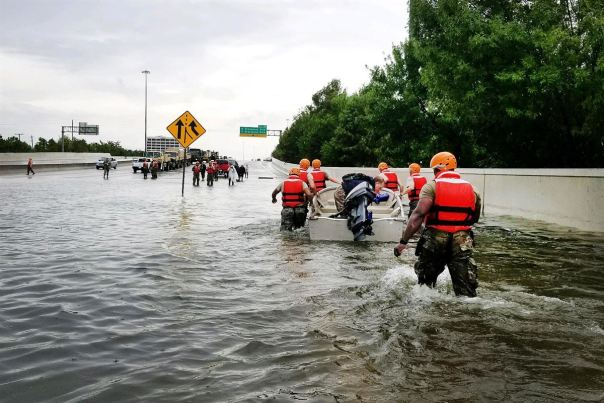
Whenever a disaster strikes, we’re prompted to ask, “How can we help.” May I suggest the following?
First, we are part of an association of 1200 churches that is mobilizing not only financial resources, but actual “on the ground” teams to help with the arduous task of restoring and rebuilding homes and lives. We participated together during the aftermath of Katrina, and this is another opportunity to work together to make a difference.
If you’d like to make a financial donation to assist with the needs, you can click here. As the details and opportunities become clearer in the coming days, we’ll keep you informed about opportunities for teams of volunteers to assist in other ways, such as collecting needed goods, and/or sending teams to the affected areas.
The second opportunity is not about people in Texas, but people right here in Maryland. I’m referring to our Rooted Experience which starts again on September 12th. You may have already heard about it. If not, it’s a 10-week experience designed to help you connect with God, connect with the church, and connect with your purpose. And boy oh boy, it will do that and more! Listen to the comments of some of the hundreds of people at Seneca Creek who’ve already taken this step:
I struggled all my life with depression and being afraid. Fear would take me into a vicious cycle of depression that would be hard to escape. I have been on so many medications trying to find the right one that would agree with me. Being stuck in that dark hole was overwhelming and seemingly never ending. But I hid it well so others wouldn’t know and hold it against me.
Rooted changed me and it changed my outlook on God… Rooted helped me learn some very important truths about the God who loves me and what His purpose is for me…
I didn’t want to attend Rooted. I thought it was only for people who were new Christians or new to the church or needed a little extra help in their walk with the Lord. I was afraid it would be a waste of my time. Pride, I guess… Rooted was more than learning the basics about Christianity, faith, and God. It helped me connect with other women in the church, break strongholds and shame from my past, and gave me the confidence and clarity to pursue my calling. I started the group not having any connections in the church. I felt like if I didn’t show up one week, no one would even notice. Even though I had been attending the church for over three years, I just wasn’t connected. Rooted changed that. Today, I am still very close to the women in that group. We pray, share and eat together. They are my sisters, and I know that they would drop everything and pray for me (and I for them).
God used these women to help me break strongholds and a pattern of shame from my past… I really felt God’s Spirit set me free from negative patterns I had struggled with for years. Without…Rooted, I’m not sure how much longer I would have been stuck in pain, shame, and darkness. I am so much freer, happier, and confident now… I can genuinely say my life was changed.
Rooted left me feeling empowered the most. I know that seems like an odd word to use, but the reason is because before Rooted I was still a very, very new Christian. I didn’t know too much but I did know that I was a believer. I have learned so much in Rooted about myself, other people in my group, and most importantly I learned more about God.
Before Rooted…I was a believer but still had trouble sharing that with some people because although not proud, I used to refer to people that were believers as, ” Holy Rollers, and Bible Pushers” because I was ignorant. And because of the person I was, I was scared to tell people I believed in Jesus and the Christian life.
Rooted made me be proud to tell people about my faith and took the fear of being made fun of for it away! For that reason… I used the word EMPOWERED.
I thought it would be a great way to move deeper into my relationship with Jesus Christ and at the same time for me to get to know others in the church beyond the weekly “meet and greet” handshake… Rooted was just what I needed at the time. A safe place to share concerns, worries and blessings with others who also were working through their journeys as well… I loved going every week-and I was sad when it ended. I still feel fellowship and friendship with the individuals in my group and have moved into small group ministries with several of them.
Rooted is a place where true friendship and bonding are fostered more effortlessly. Some of my most profound relationships began in Rooted. It kept me connected, energized and emboldened. I look forward to more experiences like Rooted.
You have an opportunity to start writing your own Rooted story. Click here now to register for this life-changing experience! You will not regret it.
-Pastor Mark
What THEY said
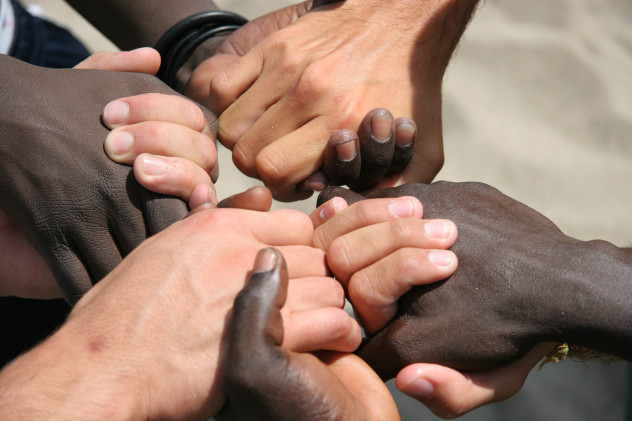 I traffic in words, but there are many who speak better than I do. Here’s an excellent statement regarding the churches in the DC region and the conversation about race, racism, and bigotry that has embroiled our nation. Couldn’t have said it better.[Note: this was intended for pastors to read and affirm, but I think it’s useful for all of us.]
WE AFFIRM that every human being is created in the image of God, and therefore carries the inherent value and dignity of God’s design. We affirm that the variety of human cultures on earth is a beautiful expression of God’s love for diversity. We affirm that Jesus Christ was crucified and resurrected not only to offer humankind the gift of eternal life, but also to shatter every division—social, political, economic, or racial—which would separate us. We affirm that God’s consummated Kingdom will be a place of rich diversity and cultural expression. We affirm that the church is called to be a community that reflects that present and future Kingdom.
WE REJECT the ideology of white supremacy, including antisemitism, as an unqualified evil, a denunciation of the gospel, and a heresy which wars against God’s design for human culture and creation. We reject the notion that white people, or any collection of humans of any culture, are superior to any other. We reject any ideology that seeks to erect or maintain divisions that God has torn down through Jesus Christ. We reject the efforts to place the good of one race or one nation above the good of all, for God desires all people to be saved and come to a knowledge of the truth.
WE REPENT because the church has been complicit in the sins of racism, either through the defense of slavery, segregation, and discrimination, or through passive silence and inactivity. We repent because Christians have played a major role in helping create the segregation and racial injustice that we see in our city and nation today. We repent of our own racism, fear, and hatred, both conscious and unconscious. We repent of our reluctance to be agents of healing and reconciliation in our churches, in our city and in our nation.
WE RESOLVE to preach, teach, and advocate against the sins of racism. We resolve to lead in the way of love, and to seek ways to heal the divisions that separate races and cultures in our city. We resolve to listen to those who have been wounded and dehumanized by racism. We resolve to pray fervently for God’s healing and reconciliation. We resolve to help our churches become more hospitable and welcoming communities to diverse people.
Finally, WE RESOLVE to pursue Jesus Christ’s perfect standard of equality, justice, and love in our churches, region, and country.
(more details and a Spanish version available here.)
Couldn’t have said it better. Let’s continue to pray and work for the kind of community that Jesus envisioned.
-Pastor Mark
It’s time to stop pouring gas on the fire
 Yes, I’m talking about what everyone’s talking about. The used-to-be-simmering-now-boiling-over conversation about racism and the legacy of racialization in this country. It’s a full-fledged bonfire of emotions, history, sound-bites, hatred, and confusion. What can you do?
I humbly offer the following suggestions as a way to stop pouring more gas on the fire, and a roadmap toward a better society and a better world. My comments are directed at those who desire to be followers of Jesus. If you’re not in that group, feel free to disregard my comments.
What to STOP doing: (because these actions make the fire bigger)
- Shouting – Honestly, does anyone like to be yelled at? Has shouting ever changed anyone’s mind? If you want an interesting exercise, check out who shouts at whom in the New Testament. (Hint: Jesus never shouts at anyone)
- Hating people – I know the Bible says “hate what is evil, cling to what is good.” (Newsflash: The rest of that passage will pretty much take the wind out of the hate-sails we’re hoisting…check it out here.) The problem is that we seem to really struggle in the area of “hating the ideology but not the person.” We end up shooting the messenger. Which incites more hatred. More gas on the fire. That person whose ideas make you want to throw up, well that’s a person that was created in the image of God. That’s a person that God loves enough to send his Son to die for. That’s a person who is worth redeeming.
- Assuming – This may be the hardest thing to stop doing. Because we’re wired to make quick assessments of everything around us. Whether it’s the way someone else looks, dresses, drives, eats, votes, or speaks, we make assumptions. We assume they don’t have the brain power we do. We assume they have marginal literacy skills. We assume that we know their motives, their heart, their history, and their intentions. More gas on the fire. There’s a better way…
What to START doing (these will actually illuminate the way forward)
- Listening – Not just listening to people who agree with me, but more importantly, listening to people who are different than me. People with a different political affiliation, or a different skin color, or a different economic background, or a different country of origin, etc. This means having an honest to goodness conversation. Actually, MANY conversations. We usually call that a friendship. (This is the problem with “unfriending” everyone with whom you disagree.) Jesus was friends with all kinds of people who held all kinds of beliefs, many of them diametrically opposed to Jesus own beliefs. He even invited a tax collector (one of the most hated figures in his day) to be part of his inner circle of friends! And I submit to you that you’ll get more useful and accurate information by sitting down and listening to friends who are different than you than you will ever get from listening to the news headlines. I know that my own life has been enriched and transformed by the countless conversations (sometimes painful to hear) from friends who have spoken truthfully about their experiences, their beliefs, and their lives. (Thank you to Harold, Dianne, Rosco, Nelson, Dwighd, Ricky, Tim, Wayne, Sonia, Bruce, Angela, Alvin, Warren, Uriel, Alex, Michael, Sohko, Mary, Jennifer, and so many more…)
- Understanding – We all have blinders and blind spots. When we listen and begin to understand, those blind spots get smaller. If we can’t articulate WHY that other person believes what they do, then we are only making assumptions (see list above). If we don’t know WHY someone believes what they do, we succumb to what psychologists call the “fundamental attribution error.” IOW, our brains will MAKE UP a reason for their beliefs/actions. And usually the reason we settle on is this: they’re stupid. Really? We can do better. You don’t need to AGREE with the other person, just understand. Understanding is the path forward.
- Praying – I’m not talking about “pray and do nothing.” I’m talking about praying first. And last. And in between. Jesus himself calls us to “love your enemies and pray for those who persecute you.” And he said that to people living under foreign occupation. They couldn’t vote for anyone. They couldn’t protest without facing execution. They had no rights at all. If we would spend half as much time praying for those we disagree with as we do commenting and posting about them, where would we be? Pray for others to have an encounter with Jesus. Pray for them to learn to love God and love their neighbor as themselves. Pray for them to be concerned with justice for all. Pray for God’s kingdom to come in their life. Pray for them to see the errors in their own lives. And then pray for yourself. Pray for patience and wisdom. Pray for the peace of God that transcends all understanding to guard your heart and your mind. (see Philippians 4:6-7) Pray for the fruit of the Spirit to be born out in your own life. (see Galatians 5:22-23) More praying, less posting.
- Speaking truth to power – There is injustice in our world. In some places it is state sanctioned. It other places it is woven into the fabric of the culture. But just like the prophets of the Old Testament, we have opportunities to speak God’s truth to those in power. It might be to a friend, a co-worker, a family member, an elected official, or a business owner. The truth is that God’s plans for humanity have been sabotaged by sin. And the enemy of God has used every opportunity to build “dividing walls of hostility.” But the gospel of Jesus Christ is the power of God to tear down every wall that separates and rescue us from the lies of the enemy.
The ideology that was represented by the “alt-right” movement in Charlottesville last weekend is the exact opposite of the kingdom of God that Jesus came to launch. Jesus’ kingdom is inclusive of “every nation, tribe and tongue.” And the church of Jesus Christ is called to be a place where “there is neither Jew nor Greek, slave nor free, male or female, for we are all one in Christ.”
Jesus calls his church to be a light in the dark world. Not a bonfire that rages out of control and consumes and destroys, but a light that shines brightly, illuminating the way forward. So instead of throwing more fuel on the bonfire of racial turmoil, I challenge you to ignite the H.O.P.E. of Christ in this world. I welcome your comments below…even if you disagree with me. 😊
-Pastor Mark
The unintended casualty of being better informed

This is an age of unprecedented information. What’s more, this has led to very helpful understanding about why life is sometimes so difficult. The challenges and obstacles in your life might have little or nothing to do with you!
As we’ve grown in our understanding of history, social systems and injustices, we’ve come to understand that our individual struggle might be the result of the (sometimes immoral, unethical, or even illegal) actions and policies of others. And while we might not know or interact with those others, they can influence our lives in profound ways. One example is the legacy of slavery in this country and its impact on race relations today. Another example might be the ways in which global trade and commerce affect local job markets, employment opportunities, future earnings, and pockets of poverty in different neighborhoods.
I think it’s a good thing that we have more and deeper understanding of how all these events, decisions and powerful leaders (past and current) are connected to our everyday lives.
But there’s a dark side to it as well. As it becomes more logical and natural to hold others responsible for the ways in which their decisions have led to our difficult circumstances, it also becomes tempting to let ourselves off the hook for our own decisions and actions. IOW, we can get so caught up in identifying how others have made a mess out of things that we start to think that we have no responsibility whatsoever. It’s the unintended casualty of being better informed.
As an individual, you or I CANNOT:
- Dictate economic forces
- Undo the injustices of others
- Set national policy
- Change social systems
- Choose a better family in which to be born
But as an individual you or I CAN:
- Determine to grow in Christlike character
- Choose to forgive
- Decide to ask for help
- Act in loving ways toward others (even the “unlovable”)
- Admit when we’ve messed up
- Spend our time and money on things that matter
- Use our voice to speak truth to power
- Change our daily routines in order live out our beliefs
- Choose friends who will encourage us to become healthy
The challenge we all face is in accepting and embracing responsibility for our own growth and change. But that’s precisely what Jesus calls us to do. Paul the apostle put it like this:
You were taught, with regard to your former way of life, to put off your old self, which is being corrupted by its deceitful desires; to be made new in the attitude of your minds; and to put on the new self, created to be like God in true righteousness and holiness. (Ephesians 4:22-24)
You and I CAN put off the old self, and we CAN put on the new self. If you want more specific details, Paul offers some powerful and practical steps on how to do that in the following verses. Check them out here.
By all means let’s be better informed. But hopefully we can avoid becoming a casualty in the process. Feel free to add your comments in the section below.
-Pastor Mark
May I wash your feet?

That was Jesus’ question. It’s a strange request in our culture. Well into the awkward range (although that doesn’t stop some from practicing this tradition today). What’s really going on here?
In this well-known account of Jesus, (in John 13) he provides the ultimate example of what has been named “servant leadership.” Servant leadership has found a place in our cultural vocabulary. But it’s easier to find a book about it than to find a practitioner of it. Why is that? I suspect it’s because we’ve missed out on what this remarkable incident is really about.
As we explored last Sunday, it’s more than simply an object lesson in humility. (Ironically humility was hardly considered a virtue at all until Jesus MADE it one.) This scene is really about a deeper truth or truths being practiced and proclaimed. When Jesus stooped to wash the dirty feet of his prestige-seeking disciples, he drove home three critical truths:
- They had much more value than anyone else had imagined. They were valuable enough in the eyes of their Heavenly Father that he would commission his son to mount a rescue mission for them, even while they continued to bicker about which of them was the greatest.
- They had a much deeper need of rescue than they could imagine. The footwashing ceremony was a prequel to the ultimate cleansing which Jesus would accomplish only hours later as he went to the cross on their behalf. (Hebrews 10:14)
- They had a much grander calling than they could have imagined. Jesus footwashing was concluded with this instruction, “Now you go do for others what you’ve seen me do for you.” (paraphrase of John 13:15)
Who would have thought that a simple act of service would have such profound implications? Well, Jesus would. That’s why he washed their feet. And that’s why he “washed” yours, too.
- Do you believe you have that much value?
- Do you believe you have that much need for God’s rescue and restoration?
- Do you believe you have that grand a calling on your life?
If you didn’t answer “yes” to all three of these, then practicing servant leadership is going to be very, very challenging. Because I promise you that the people God brings into your life and asks you to “lead as a servant” are going to bother you, challenge you, annoy you, and sometimes resist you.
But if you can understand and embrace these truths, you’re on your way to a magnificent calling and life. If you can believe that you have THAT much value to God (regardless of what others say). If you can believe that you have THAT much need for God to rescue you (which by the way puts you in good company with those God asks you to serve). If you can believe that you have THAT grand of a calling, then you’re able to “wash one another’s feet.” You’re on your way to igniting the H.O.P.E of Christ. Starting right now.
-Pastor Mark
TBT and the risky life

Once upon a time there was a portable church. Or to borrow and mangle a line from Tolkien, “In a dark auditorium in an aging high school there met a church.” So begins a TBT story.
(Note: TBT is short for throwback Thursday, a chance to reflect on your past and hopefully gain from that reflection.)
It was the fall of 2007. Average weekly attendance at Seneca Creek had dropped by over 500 people (almost 45%) per week in less than three years. Finances were taking a beating. And the leadership stood up and announced an ambitious plan to purchase and renovate a building that would ultimately serve as the hub of ministry activity at 13 Firstfield Rd in Gaithersburg.
It seemed impossible. It really was impossible. The numbers were going in the wrong direction. And the bankers weren’t able to make it work. And then God stepped in and did what we could never imagine. The building owner worked with us and provided additional financing and more to enable the project to move forward. Our campaign to raise the necessary funds for Phase 1 of construction got underway. Hundreds of people responded by faith to God’s call, and sacrificed so the dream could become a reality.
Why am I retelling this story? Because it all started with a risky, faith-filled first step. It seems that’s the way God typically works. A risky step of faith, then God begins to work. Our preoccupation with safety sometimes gets in the way of the things God is calling us to do.
The famous missionary to China, Hudson Taylor, once commented:
“Unless there is an element of risk in our exploits for God, there is no need for faith.”
So as you consider your summer plans, and your daily routines, and your opportunities, let me challenge you with this thought: What risk is God asking you to take? And what’s stopping you from stepping out in faith?
One day in the future you could have a TBT and look back to this moment, when you took a faith-filled risky step toward God’s future for you. What story will you tell?
-Pastor Mark
The battle for the podium

There’s an epic battle being waged across Europe right now, and most of you didn’t even know it.
I’m talking about the most celebrated, most-watched, most talked about cycling race in the world: the Tour de France. It barely registers on the news wires in this country for reason I will not explain here. And if you’ve ever attempted to watch one of the 20 stages of a tour (most of which take around 5 hours), you probably fell asleep or switched the channel.
But here’s what’s really going on. Each of the 22 teams (consisting of 9 riders each) are attempting to get their best rider on the podium. And they work throughout the tour to accomplish that by using their strengths and strategy. Often they toil in obscurity, riding in front of their leader to help him conserve energy, or trading bikes if his breaks down. They serve as couriers bringing food and water from the team car up to the leader. Most of them will never get much recognition.
So why do they do it? They do it so their leader can stand atop the podium at the end of the day or the end of the tour.
As followers of Jesus we, too, have a “team leader.” And at the end of the day we want him to be standing atop the podium. We want him to be in first place, to get the glory and fame. The way we make sure that happens is by doing the things we’re on the team to do. For some it’s serving in obscurity. For some it’s giving sacrificially. For some it’s opening their homes and lives in hospitality. For some it’s leading diligently. For some it’s praying passionately. For some it’s encouraging consistently.
We have different gifts, according to the grace given to each of us. If your gift is prophesying, then prophesy in accordance with your faith; if it is serving, then serve; if it is teaching, then teach; if it is to encourage, then give encouragement; if it is giving, then give generously; if it is to lead, do it diligently; if it is to show mercy, do it cheerfully. Romans 12:6-8
Everyone on Jesus’ team is on the team for a reason. And that reason is not for us. It’s for the leader.
So how are you “riding” this season? Who are you riding for? It’s easy to think the race is about us. It’s easy to plot our own strategy for climbing the podium. Are you riding for the team leader? Are you waking up in the morning and using your life and gifts to ensure that what people see is your leader, Jesus?
-Pastor Mark
Nothing is impossible. Right?

What if you wanted to fly? (That was the most frequently mentioned super-power last Sunday.) Didn’t Jesus say that if you have faith the size of a mustard seed then nothing will be impossible?
Yes, he did say that.
Truly I tell you, if you have faith as small as a mustard seed, you can say to this mountain, ‘Move from here to there,’ and it will move. Nothing will be impossible for you. (Matthew 17:20)
But he was talking with his disciples. About things that he had called and empowered them to do. Things that were part of his agenda to bring restoration and redemption to this world. So in that context, with even a tiny amount of faith in Jesus and his new kingdom, then nothing is impossible.
The problem we often face is we’re not aligned with Jesus’ agenda. It’s not that we’re necessarily OPPOSED to it, we’re just not aware of it. Or very interested in it. Because we’ve got our own agenda. Our own concerns. Our own dreams. Our own problems. And flying would be nice.
But what if we could line up our concerns, our agenda, our dreams, and even our problems with Jesus? If we did that, we would start to see some pretty amazing things happening.
- Prayers answered.
- Prodigals returned.
- Marriages restored.
- Financial peace.
- Injustice abolished.
- Communities thriving.
- Dreams becoming reality.
Which sounds a lot like how the church actually got started.
I will pour out my Spirit on every kind of people: Your sons will prophesy, also your daughters; Your young men will see visions, your old men dream dreams. When the time comes, I’ll pour out my Spirit on those who serve me, men and women both, and they’ll prophesy. (Acts 2:17-18 The Message)
So how do we do this? How do we do the impossible? It begins with faith the size of a mustard seed. Not “I’m convinced of these propositional truths,” but “I’m giving my allegiance to a new king, King Jesus.” It begins with a decision, EVERY decision, to align my life with the purposes and plans of a new leader. It’s a learning curve for sure.
That’s what we’re attempting to address each and every Sunday at Seneca Creek. Hopefully you can join us, either on the premises or online.
And together, nothing will be impossible.
-Pastor Mark
P.S. We did it! We brought in 300 bags of groceries for Gaithersburg HELP in the month of June! Thank you for making a difference in the lives and pantries of hundreds of families who struggle with food insecurity.
 Living in faith, hope and Love