Look what else came out of the grave!

Our world is full of conflict, hostility, frustration, tension and despair. And yet, if you read the story of Jesus’ resurrection, one word pops out numerous times: Peace! It wasn’t just a body came out of the grave.
Real peace also emerged from that dark tomb.
Now when you read the word “peace” in the Bible, know that it’s shaped by the Hebrew word, Shalom. This is WAY beyond just the absence of hostility. This is a word that captures the hopes and dreams of all humanity. It includes the concepts of wellness, wholeness, safety, contentment, health, prosperity and friendship. In short, it’s “the good life.”
So why is peace connected to Jesus’ resurrection appearances? Because Jesus resurrection is actually the key to unlocking true peace (shalom). And if we understand that, we’ll be able to live increasingly WITH shalom in our lives and our community and our world.
We’ve devoted this entire weekend series, “The Day That Changed the World,” to exploring how this all fits together, and how to live with shalom in light of the resurrection.
If you missed last week’s message, “The Day That Changed My Identity,” be sure to listen to it here. Then join us this weekend, Saturday or Sunday, to take the next steps into a life of genuine peace and shalom.
-Pastor Mark
You built a power plant in Africa



Last month we welcomed Bishop Issangya from Tanzania, and we challenged our church to partner with him again. In the past, we’ve funded a medical clinic that is now operating every day. This year we asked Seneca Creek to help with another critical project.
The project is a modest building that will be used for prayer. Not some kind of glitzy prayer tower, but a 750 square foot building where students and church members can come for extended times of prayer. For most of us in America, an extended time of prayer is when more than one person prays before a meal. Their extended times of prayer often last for hours, or days! We have much to learn from our brothers and sisters around the world.
Whether it’s the local church members or the Bible School students who all get up at 3 am each morning to pray, they know that prayer is a vital source of power in a country where power is hard to come by. Prayer is a way to overcome government corruption, to overcome debilitating diseases, to overcome crippling poverty and to overcome spiritual darkness that runs rampant in many tribes.
Our challenge was to raise $7,000 dollars to fund the construction. (Yes, it costs less that $10 a square foot to build a concrete building in Tanzania…) I’m delighted to report that we exceeded that goal by several hundred dollars.
So thank you for building a “power plant” in East Africa. The impact of your generosity will be felt across the continent for generations to come!
-Pastor Mark
P.S. Remember that our Easter Sunday gathering times are different. Join us at 8:30, 10:00, or 11:30 a.m. for “The Day That Changed the World.”
Are you an appraiser or a recipient?
Do you like to worship? When you hear the word “worship” what do you think of? An hour on Sunday or Saturday? A certain type of music, which you may or may not enjoy?
What does that word actually mean? It may be helpful to understand the origins of the word. It’s from an old English word, “worth-ship.” A word that described what something was worth.
Worship is a means of declaring something’s value or worth. But not like an appraiser does. Rather, like a recipient does. An appraiser is detached and impersonal. A recipient is one who enjoys that which is being valued. The recipient has RECEIVED something personally. Because of that, they are often likely to be emotionally connected. There are strong experiences and memories. There’s history. There’s a track-record of personal benefit. The appraiser says, “Based on my research, here’s what it is worth.” The recipient says, “Based on my life experience, here’s what it is worth.”
The actions of worship are not limited to an hour on Sunday, or to singing songs. Those are fine as far as they go. But worship is a way of life. It’s a life lived in response to the benefits one has received (and even continues to receive). In the case of the Christ-follower, worship is a response to God’s endless grace and mercy. The actions of worship are seen in the everyday choices and values and conversations. The actions of worship are seen when we say, “Because of who he is and what he has done for me, God deserves my very best.” My best time. My best talent. My best treasures.
Romans 12:1
Therefore, I urge you, brothers and sisters, in view of God’s mercy, to offer your bodies as a living sacrifice, holy and pleasing to God—this is your true and proper worship.
The way you use your time, your talent, and your treasure is a statement about the value, or “worth-ship” of God. If someone was paying attention to your life (and they already are), what would they conclude about the value you place on God? Would it be that of an appraiser, or a recipient?
-Pastor Mark
P.S. I encourage you to bring your best worship this weekend and join us for the last week in our series, “Great Expectations.”
A blog post written in the 1940’s?
 If someone asked you what you like about your church, what answer would you give?
For most of us, our answer would be influenced by our belief about the church itself. In particular, our belief of the purpose of the church. With that in mind, I would like to introduce this week’s guest blog writer, none other than the esteemed, C.S. Lewis. Mr. Lewis was kind enough to write this article for me quite some time ago…actually during the 1940’s. But as usual, his insights are spot on for the 21st century.
It is easy to think that the Church has a lot of different objects—education, buildings, missions, holding services … the Church exists for nothing else but to draw men into Christ, to make them little Christs. If they are not doing that, all the cathedrals, clergy, missions, sermons, even the Bible itself, are simply a waste of time. God became man for no other purpose. It is even doubtful, you know, whether the whole universe was created for any other purpose. It says in the Bible that the whole universe was made for Christ and that everything is to be gathered together in Him. (C.S.Lewis, Mere Christianity)
To make us into “little Christs.” I wonder how differently we might experience church if we agreed with C.S.Lewis.
I welcome your thoughts and comments below.
-Pastor Mark
P.S. Our March Unleash Prayer event is next Wednesday, March 25th. Join us as we offer “the prayer that changed our communities!”
P.P.S – Dads, if you have a daughter, be sure to bring her to the 2015 Father-Daughter Dance this Friday. Tickets available online, or at the door. If you miss it, you’ll regret it.

When a truth bomb uncovers the offensive part of us

One of the memory verses we’ve been working on as a church is Psalm 139:23-24. That verse blew up in my face last month. The verse goes like this:
Search me, God, and know my heart; test me, and know my anxious thoughts.
See if there is any offensive way in me, and lead me in the way everlasting.
I was going about my business recently, contemplating a difficult decision that involved others. I was nursing some “righteous indignation” and felt like I had reached an appropriate decision and response. The next morning the verse above came uninvited into my mind. “See if there is any offensive way in me.” I flinched. I squirmed. And I knew that my way was offensive. Oh, I knew I could justify it. But I knew the truth.
Since we began the “Celebration Challenge” of memorizing 25 verses in one year, I’ve made it clear WHY we’re doing this. It’s so we can have God’s “truth, power and wisdom” available when we need it. In that moment last month, the truth of God’s word went off like a bomb in my mind. And when the smoke cleared, I could see the offensive way.
In case you’re wondering, yes, I DID change my decision. Grudgingly at first. But I did.
Like you, I’m in process. And I hope that you, too, are able to allow God’s “truth, power and wisdom” to work in your life. If you have any of your own stories to share in this matter, please use the comment box below.
And plan to join us this weekend for our new series, “Great Expectations.” What exactly do we expect from Jesus? What SHOULD we expect from him? To fix our problems? To make us feel better? To deliver us from our enemies? Hope to see you there!
-Pastor Mark
P.S. Dads, get your tickets today for the Father-Daughter Dance! Time’s running out.
ICYMI, your beliefs could be dangerous, even deadly.
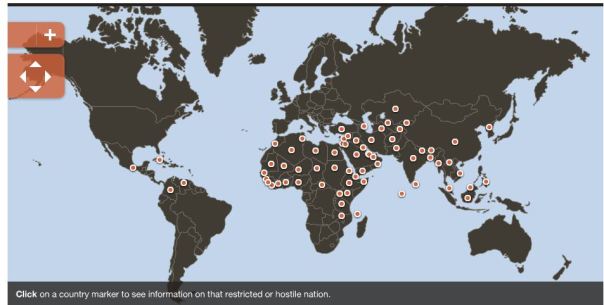
Last Wednesday evening we hosted another “Unleash Prayer Event” at Seneca Creek. Our focus was the global church. Specifically, those parts of the church that are facing grave danger.
As part of our Celebration Challenge year, we’re taking time every month on the 25th to come together and pray for the church. Last week we spent time praying for:
- The multi-cultural ministry at Seneca Creek.
- Our global partnerships with the International Evangelism Center in Tanzania, and the New Life Children’s Home in Guatemala.
- And MOSTLY, for the most difficult and dangerous circumstances of Christ-followers in countries and cultures where they face severe and life-threatening opposition.
It was a sobering time of prayer for those of us accustomed to the comforts and security of American suburbia.
We prayed for individuals who have been rejected by their families. We prayed for church leaders who have been arrested, tortured, beaten, imprisoned, or killed. We prayed for churches that are harassed and terrorized by opposition groups, often with governments that are complicit or unconcerned. We prayed for families of those who have been abducted because of their faith.
And through it all, we came face to face with this sobering fact: The Christian faith that so many of us profess is dangerous and even deadly in many communities around the world in 2015! In this season of Lent, of seeking to connect with God and to hear his voice, I hope we can hear him urging us to join with our brothers and sisters in the Body of Christ who need our prayer support more than ever.
If you’d like to join in praying for those who are living out their faith in the face of adversity, you can read their stories and learn how to pray specifically here.
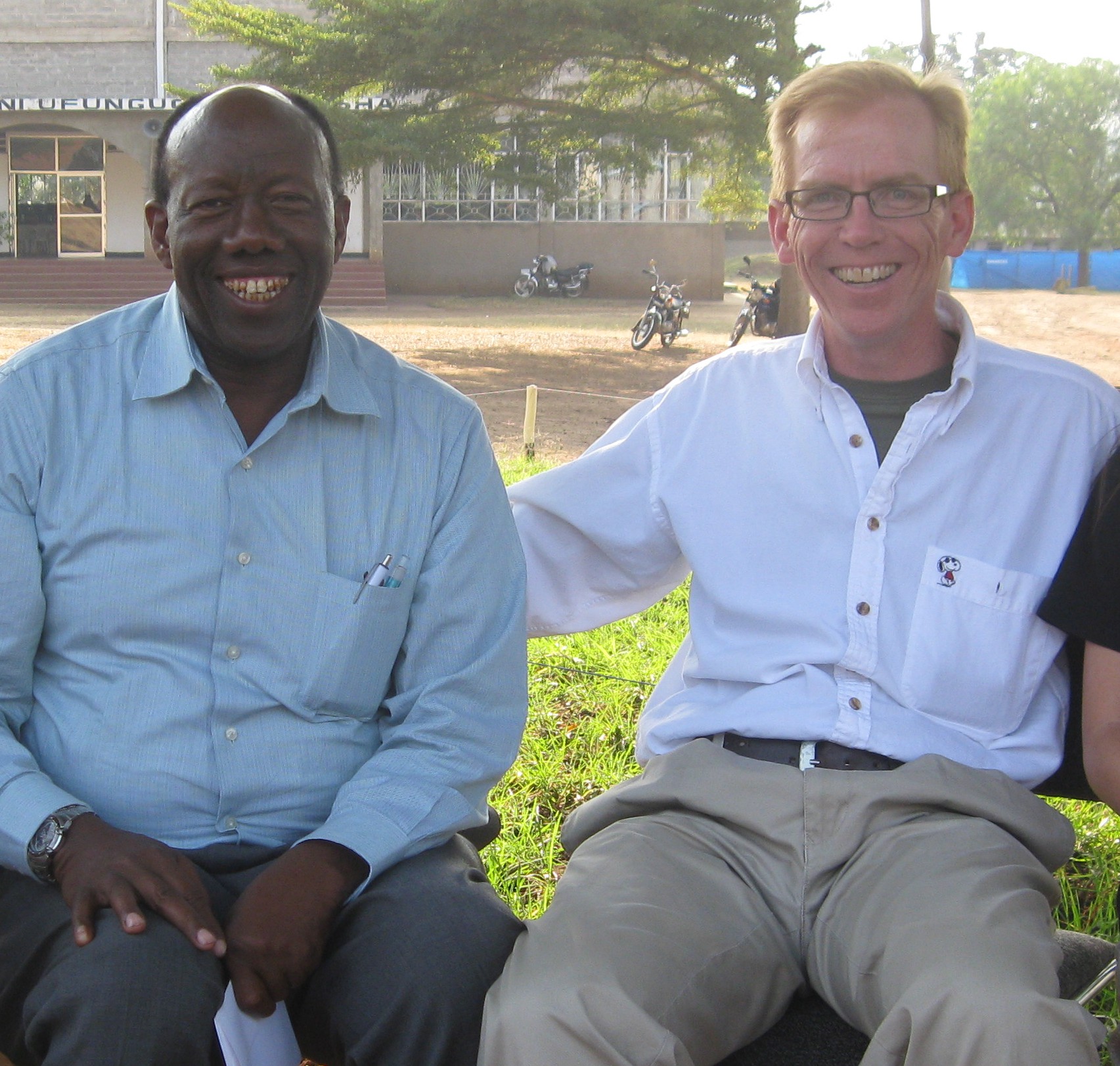 And hopefully you can join us this weekend as we welcome Bishop Eliudi Issangya from Tanzania. It’s always a delightful time when he visits and preaches.
-Pastor Mark
Why you might need a simple checklist for your life

I just learned something fascinating about the history of the famous B-17 WW2 bomber. It almost didn’t make it as a production aircraft.
On an early test flight, the pilot and co-pilot were so busy checking all the new-fangled functions that they neglected some important ones and died in a fiery crash during takeoff. The conclusion was that the plane was just too complicated to fly safely.

But the manufacturer came up with a solution that salvaged the plane’s reputation and allowed it to fly into aviation history. The solution was…a checklist. That’s right, a checklist. A checklist (or actually series of checklists) that would ensure the pilots checked all the various systems ahead of time, and thus were able to focus on flying when it came time to do just that.
Why does this matter? At our weekend services this year we’ve been discovering the benefits of putting our lives “under new management.” We’ve come to realize that Jesus is a much better “manager” of our lives. But like a brand new airplane, our lives can often get complicated. And we can become distracted by all the voices and demands competing for our attention. And we can forget to “fly our plane” as it were. With all the distractions we face, we often end up putting areas of our lives back under OUR management. We end up leaning on our OWN understanding (see Proverbs 3:5-6). This can lead to some fiery crashes.
So how do we ensure that we consistently live under Jesus’ management? What can we do so we don’t end up next January thinking, “Oh, yeah…I used live under new management…I should try that again!” The solution is…a checklist.

Last Sunday we reviewed the seven areas of life that we’ve explored during this series.
- Our bodies,
- our money,
- our decision-making,
- our minds,
- our tongue,
- our sexuality, and
- our emotions.
(If you missed last weekend because of the weather, be sure to check out the podcast here.) Why not make that a checklist. Once a week or once a month, just take ten minutes and review these areas. Ask yourself,
Am I managing this area, or is Jesus?
Am I leaning on my own understanding, or on God’s?
Do I need to put this area back under “new management” again?
Am I giving God full access to this part of my life?
Make this checklist a regular part of your life, and you’ll be able to experience life as God designed it.
-Pastor Mark
You can’t handle the truth

One of my observations is that we often don’t want someone to tell us the truth.
You know, the truth about…
- How we’re spending our time.
- How we’re using our words.
- How we’re ignoring our problems.
- How we’re abusing our bodies.
- How we’re neglecting our souls.
- How we’re fooling ourselves.
- How we’re sabotaging our marriages.
- How we’re squandering our money.
- And so on…
What if you could receive the truth—wrapped in grace and mercy—from someone you trusted?
Jesus’ plan is that his church, his “body,” would care for one another…encourage, bear burdens, love, forgive, etc. But for that to happen, we have to let the truth in.
When was the last time you let someone who really knows you speak God’s truth into your life? Better still, when was the last time you ASKED that person to speak into your life? Is there anyone like that in your life?
Maybe part of what we need to consider for Lent is to open our life to God’s truth…as revealed through his church.
Can you handle the truth? WILL you handle the truth?
-Pastor Mark
3 good reasons to reconsider Lent

For the past several years I’ve tried to make the season of Lent something more practical and transformational. And I’ve encouraged our church to do the same. Why?
Here are three great reasons worth considering this:
- GOD: God will show up in unexpected ways. If you’ve had a desire to “hear” from God, or to get direction, wisdom, insight, etc., Lent is a great way to open up that communication channel. It’s a way to create opportunities for God to connect with you.
- SELF: Our traditions and habits are a powerful influence in the people we become. Just like celebrating Thanksgiving helps us develop gratitude, and regular exercise influences multiple areas of our mind and body, so Lent habits influence us at the core of our humanity. We gain understanding of our desires and appetites, and learn that they no longer have to control us.
- OTHERS: Experiencing voluntary, temporary deprivation/discomfort helps you relate to those who experience it permanently without their consent. For example, our missions teams often come back with a permanently altered view of the world and deeper compassion for those who live without the things we take for granted (like healthcare, insurance, transportation, education, representative government, etc.) In short, you become more Christlike…more truly human.
Typically, Lent is observed for 40 days from Ash Wednesday (which is February 18th this year) until the Saturday before Easter (April 4th). Sundays are not included, and provide an opportunity to celebrate, rejoice, and look forward to Easter.
The options of how to practice this are limitless. They fall into two basic categories:
- Things to remove from your life during Lent, like:
- Desserts
- Alcohol
- One or more meals each week (fasting)
- Television (although March Madness fans rarely give this a second thought)
- Profanity (always recommended)
- Gossip (ditto)
- Tobacco
- Driving over the speed limit
- Meat (or red meat)
- Junk food (and/or soft drinks)
- Movies
- Shopping for non-essentials
- Starbucks, or coffee in general (yes apparently that’s possible)
- Cell phone use in the car
- Things to add to your life during Lent, like…
- Bible reading (e.g. read all four gospels during Lent)
- Generosity, like tipping an additional 10%
- Rising 30 minutes earlier to pray (it helps to change bedtimes, too)
- Compliment someone(s) each day
- Journal your experiences with God
- Serve someone in need every day/week
- Pray with your spouse/family regularly
- Schedule times of solitude/silence (could be an hour or two each week)
- Listen to music that purposefully praises God
- Exercise regularly (assuming that’s not your current habit)
- Rest more, including a genuine Sabbath day
So use this list to spur your imagination. Spend some time thinking and praying. How would you like to use the season of Lent this year? Feel free to share your ideas and decisions in the comment space below.
-Pastor Mark
Armed and dangerous

There’s a vigorous debate in our country about guns, violence, freedom, and rights. But what we often fail to notice is the presence of weapons in every single home.
In fact, there are weapons in every relationship. And too often, we use our weapons to threaten, injure, or destroy others. Each one of us is, in effect, armed and dangerous. What am I talking about?
The tongue. As we discussed last weekend at Seneca Creek, the tongue is a potent power that we often use to humiliate, intimidate, dominate and manipulate. We get eager, anxious, excited, angry or fearful, and we open our mouths and become dangerous. We use our tongue as a weapon.
- We use words to tell someone how incompetent they are, or how disappointing they are, or how stupid they are, or how ignorant they are.
- We use words to tell someone that we don’t approve, don’t accept, don’t appreciate, or don’t love them.
- We use words to highlight the other person’s failures, their flaws, their forgetfulness, and their faults.
- We use words to tear down the other person’s appearance, their personality, their accomplishments, and their reputation.
- We use words to prove that we’re smarter, savvier, stronger, or in control.
King Solomon, the wisest man in the ancient world, put it like this:
The tongue has the power of life and death. (Proverbs 18:21)
Don’t miss the contrast. You can use your tongue as a weapon, or as a source of life. You can speak words of life into anyone…even those who you don’t particularly like or agree with!
I’d be willing to bet that somewhere in your life, someone spoke words of life to you.
- Someone encouraged you to apply to that prestigious school.
- Someone said, “I believe you can do this,” when no one else did
- Someone offered to forgive you when you knew you didn’t deserve it.
- Someone agreed to love you for the rest of your life when you struggled to love yourself.
The choice is yours. You CAN choose wisely. You CAN speak words of life into someone else today. That IS God’s desire and design for you and me.
You’re “armed” with the power of your tongue. Choose life today.
-Pastor Mark
 Living in faith, hope and Love