Author Archives: mark tindle
My history with Black History month
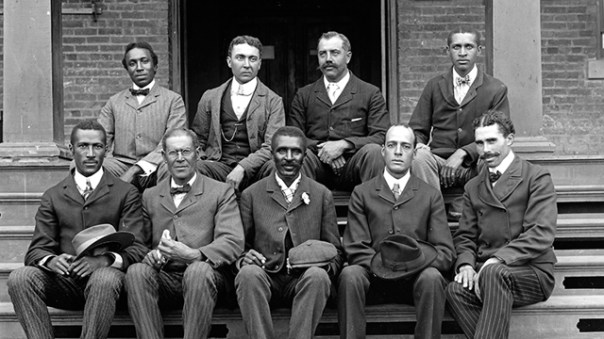
February is Black History month. There was a time in my life when I truly didn’t get it. I didn’t understand why a special month was necessary.
But through the patient conversations of many friends (too many to name, but you know who you are), through the compelling writings of gifted authors, and through the convicting words of powerful preachers, I’m at a very different place than I used to be.
This month I’ve been delighted (and somewhat embarrassed) to learn about key African-Americans in our nation’s history who were innovators, inventors, leaders and more. Mostly they are names I’ve never heard before. My life is enriched because of them. And now I am beginning to get to know them. And Facebook DOES have some redeeming value after all. (E.g. did you know that today, Feb. 23rd, is the birthday of W.E.B. DuBois, b. 1868, author and historian, and the first African American to earn a doctorate from Harvard.)
This month I’ve also been reminded of the history of the African American church, including it’s painful origins and prophetic voice. (I even learned recently about a “Black Reformation” in the 18th century, led by former slave Rebecca Protten and others.)

And this month I’ve been encouraged by the 25 or 30 people of Seneca Creek who gather every Sunday night around tables to learn and grow together in our Multiethnic Conversations groups. Many of the conversations are centered on the issues related to the black-white history of this nation. The candor, the humility, and the courage shown by these people is inspiring.
One of the questions that came up recently at a table group was, “How do we help other churches grow in this area?” It’s one of the most important questions of the group so far. While I don’t have all the answers, I know two things are essential for us, and for every other church that is on this journey:
- Relationships. It starts with people like those of us at Seneca Creek who are willing to have honest, courageous conversations, and are willing to suspend our beliefs and opinions long enough to listen to those who don’t look like us.
- Prayer. This is truly the work of God to bring about reconciliation. And this topic is the devil’s playground in our country. We need the power of prayer to overcome our fear, our prejudice, and our pride. We need the power of God to tear down the strongholds of injustice. We need the power of prayer to soften our own hearts and unstop our own ears.
February is just a month. But it’s so much more. It’s a month to remind us of the challenge of becoming the kind of church that Jesus had in mind. And it’s a month to remind us that our country and our world desperately need the church to light the way in this increasingly fractured and divided world. Maybe by focusing on black history for a month we’ll learn how to rewrite our own history for generations to come. Which would make this a very important month indeed. That’s my prayer.
-Pastor Mark
When Valentine’s Day and Lent collide

I’m writing this blog on February 14th the traditional observance of Valentine’s Day. It’s also Ash Wednesday, the traditional beginning of Lent. Here’s why this collision of holidays is a good thing.
On Valentine’s Day we’re inundated with candy, roses, and hearts. Hearts, hearts, and more hearts. You remember those “conversation hearts” candies, right? Little cute sayings like, “Be Mine, Sweetheart, Love You,” and so on. Heart-shaped cards, heart-shaped food, heart-shaped dishes, and heart-shaped everything.
But Lent is also about the heart. Not that pretend one with cupid’s arrow in it, but the heart that is the center of you. Some might say that Lent is just about remembering Jesus’ suffering. But dig deeper. WHY did he suffer? Why did he go to the cross? It was so you could have a new heart. He even said that our hearts are the fountain of evil that consumes us. (Matthew 15:19) Only with a new heart can we love well. That includes loving God, loving others, and even loving our selves appropriately.
So as we embark on the journey of Lent I would encourage you to think about your heart. Where is it bent out of shape? Where does it need to be renewed? Then consider abstaining from something, or adopting a habit or practice for the next six weeks until Easter. If you’d like some suggestions, I’ve written about this here, here, and here.
Feel free to share your Lent decisions in the comment section below. Or not. But know that the condition of your heart matters deeply to your heavenly father. On Valentine’s Day, and every day.
-Pastor Mark
P.S. One of my Lent practices this year is to select one person each day and have focused prayer for them throughout that day. That includes listening to what God has to say about that person. I’m open to suggestions.
P.P.S. If you’d like to engage in a Lent-focused Bible reading plan, this one is really good.
What the Super Bowl (ad) taught us about the Bible

You probably saw it, too. Some clever person searched the Bible and discovered that “eagles” show up in the Bible 30 times, and “patriot” doesn’t appear at all, therefore, God was an Eagles fan, and thus he would ensure they won. SMH… But that’s not the real problem.
Setting aside that silly logic, there was something far more disconcerting that occurred during the big game that sheds some important light on God’s written word. I’m referring to one particular ad that used a quote from Jesus. Which sounds great. Sort of. It was from Matthew 23, where Jesus says that the greatest among you will be your servant. (Matthew 23:11-12)
The quote from Jesus was actually part of a speech by Dr. Martin Luther King, Jr, titled, “The Drum Major Instinct.” In that speech he was calling to task those who want you to believe that greatness consists of buying their product and using their brands. He was questioning the legitimacy of companies that use marketing tactics to entice people to borrow money they don’t have to buy things they don’t need in order to impress people so they can feel a sense of greatness. (You can check out the full speech here.)
The problem is that this speech by Dr. King was used in the Super Bowl commercial to convince viewers to buy a certain brand of truck. The problem is not with using marketing to promote your product. The problem is not that trucks are a bad thing. (Hey, I drive one myself.) The problem is that the producers of this ad intentionally borrowed PART of Dr. King’s speech while avoiding the part that actually condemned the very thing they were attempting to do! In other words, they used his words (and Jesus’ words for that matter) to say something that he never intended to say!
This is referred to as “taking words out of context.” The context of Dr. King’s words was an indictment against some of the more crass forms of marketing. This is why the internet blew up at this attempt to play off of Dr. King’s legacy by using his voice to sell trucks.
The same thing happens with the Bible. We’re tempted to take the words of the writers of the Bible out of context in order to make them say what we want them to say. Preachers are sometimes the biggest perpetrators of this offense. Then their congregations learn to do the same.
Here’s an example. In the 6th century BC the nation of Israel had been defeated in battle, their nation was under military occupation, and many of the survivors had been forcibly relocated to another country. The prophet Jeremiah wrote to those exiles to provide instruction from God. His message went something like this:
- You’re gonna be there for a long time, so get used to it.
- Settle in for the long haul by establishing this as your new reality. If you do, everyone wins.
- Don’t listen to the people who tell you that I’m gonna fix it right away. They’re lying.
- When I’m good and ready (like in 70 years) I’ll take action.
- Woe to those who don’t listen to my words.
This is the CONTEXT of a verse that gets thrown around like a good-luck charm. The verse goes like this:
I know the plans I have in mind for you, declares the Lord; they are plans for peace, not disaster, to give you a future filled with hope.” (Jeremiah 29:11)
Sounds good, right? Except the context is they were facing 70 YEARS of captivity and slavery! God had plans alright, but not what they wanted. He wanted to give them a future filled with hope but most of them wouldn’t live long enough to see it. And to those who were opposing God’s current plan he said this:
I will send the sword, famine and plague against them and I will make them like figs that are so bad they cannot be eaten. I will pursue them with the sword, famine and plague and will make them abhorrent to all the kingdoms of the earth, a curse and an object of horror, of scorn and reproach, among all the nations where I drive them. For they have not listened to my words,” declares the Lord, “words that I sent to them again and again by my servants the prophets. And you exiles have not listened either. (Jeremiah 29:17-19)
Does this mean God doesn’t have a good plan for your life? No, that’s not what it means. But the context of Jeremiah 29:11 doesn’t permit us to use it as an encouragement that God will only permit good things into our lives. Because those words were spoken to people who were living in decades of bad things that God permitted in their lives.
“But Pastor Mark, how are we supposed to know how to understand a given verse from the Bible?” Great question. The short answer: understand the context. Take a few minutes to read the verses and paragraphs surrounding the verse. It will help you understand and live out God’s instructions for a flourishing life.
And you may discover along that way that you’ve been lied to. By marketers, preachers, and more.
Now I’ve got to go clean my truck. 🙂
-Pastor Mark
58 days and an ugly stereotype

Last week I spent a day with a group of rabbi’s, imams, and evangelical pastors. And one rabbi who’d spent time visiting a church very similar to Seneca Creek, made the following pronouncement to the other rabbis and imams:
“What you think you know about evangelicals is wrong.”
He went on to share about the diversity, the gracious inclusion, the artistry and creativity, the energy and the excellence. In short, he shared how pleasantly surprised he was, and how his previous beliefs were fundamentally upended by actually visiting this evangelical church in our area.
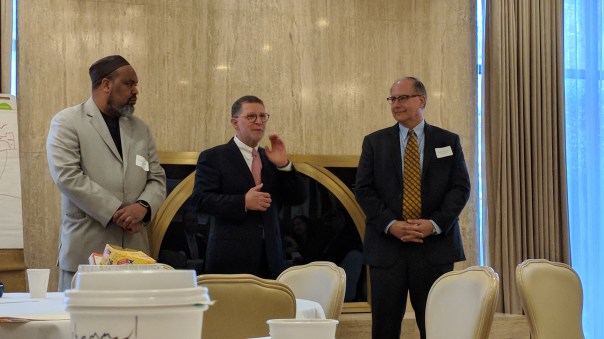
I share this story because the experience of that rabbi is similar to the experience of many of your friends, neighbors, and colleagues. Their opinions and attitudes toward evangelical Christians have been shaped by many voices, but rarely by actually getting to know and see what a church like Seneca Creek is actually like. All too often they carry in their minds an ugly stereotype of people like you and like me. And that situation needs to change.
One simple way to start the change is by inviting someone to visit with you and experience what you have experienced many times on a Sunday morning. And one of the easiest times to invite someone is for Easter Sunday. I know that seems like a long way off, but in reality it’s only 58 days away (on April 1st). That’s right, Easter Sunday is in 58 days.
So why not take a minute today and begin to pray for an opportunity to extend an invitation to one person this Easter. Take one minute each day starting today, and see how long it takes before that opportunity shows up in your lap. Then extend the invitation, and watch how perceptions can change in the life of your friend.
We’ll provide some print and digital resources in the coming weeks, but for now, it can start with a simple prayer:
Lord make me an instrument of your peace
Where there is hatred let me sow love
Where there is injury, pardon
Where there is doubt, faith
Where there is despair, hope
Where there is darkness, light
And where there is sadness, joy (St. Francis of Assisi)
-Pastor Mark
The little politician in all of us

The recent government shut-down has everyone talking and fretting. Even the “solution” that Congress reached is profoundly unsatisfying. A three week solution? Are you kidding me? But wait, isn’t that what we all tend to do?
I read recently about some long-term (as in 50 year) development goals that the Chinese government implemented decades ago. I thought, “Wow, here in America we’re lucky to have four year goals, and even then they get turned upside down when the next administration takes over!” What could we do if we could implement a long-range national plan for developing infrastructure, healthcare, education, technology, manufacturing, and more? It’s staggering to consider the power of focus over a long period of time. Instead, our politicians are more likely to look for a quick fix, something that will boost the poll numbers or help with re-election, or satisfy part of their constituency for the time being.
There’s a little politician in all of us. There’s a tendency to look for the short term solution. Quick fixes and instant solutions are great, but they usually don’t work. However, the impact of a sustained effort in the same direction for a long period of time, well, that’s another matter. The example that’s often used is that of saving for retirement. If you start early and work at it for decades, you’ll be in pretty good shape. If you try to cram it in the last five years of your employment, well…
But more important than even your financial future is your development as a follower of Christ. Or, you could say, as a person. After all, if Jesus represents fully humanity then the more we resemble him, the more truly human we become. Anything less is, well, sub-human. Wouldn’t you rather be on course to become a more complete, mature, healthy, authentic version of your current self?
So how do we tend to approach this challenge? Often it’s with quick fixes. A workshop, a weekend retreat, a 30 day program, or a best-selling book or conference. I’d like to suggest a long-term solution. A 50 year goal, if you will. Something like this:
- Commit to spending ten minutes a day in conversation with God. If that’s too ambitious, start with five.
- Begin to let God speak into your life thru his written word, the Bible. Don’t try to read it all in one month. Or even one year. Take two or three years. Or more. Just start with a few minutes a day.
- Find a place to serve someone else this month. It doesn’t have to be splashy or scary. Just begin somewhere. Then repeat that in February. And March. And so on.
- Commit to becoming a generous person. You don’t have to be rich. You just have to be intentional. A child can be generous by giving one dollar. Don’t think about what you can’t do, focus on what you CAN. Year after year.
- Start meeting regularly with a small group of people who can challenge and encourage you to pursue God’s best for you. And you for them.
These are just a few examples of implementing “spiritual practices” in your life. And the amazing thing is that when you begin to do these over and over, year after year, they change you. They shape you. And you begin to look more and more like Jesus. More fully human.
It’s not a quick fix. It’s a real change. Wouldn’t that be a great way to spend this next year and beyond?
-Pastor Mark
P.S. Dads, if you have a daughter (or daughters) don’t miss this year’s Father Daughter Dance. It’s this weekend, Friday, January 26th, 7 to 9 pm. And the venue has changed. We’re hosting it at 13 Firstfield this year.

Why a house of mirrors is a good thing

Earlier this week at Seneca Creek we partnered with the city of Gaithersburg to provide serving opportunities for several hundred people in our community. It was a crazy, chaotic, wonderful experience. And it was in many respects a house of mirrors.
The reason we host this event on MLK Day is to honor Dr. King’s own commitment to serving. But why did HE serve?
The reason Dr. King served was that he was mirroring the example of Jesus. It was because of his faith in the Servant of the Lord (See Isaiah 42:1 for more details.) He understood that followers of Christ are called to imitate the one they follow. Jesus served (see Mark 10:43-45), and so Dr. King served. By doing that, he reflected the character and kingdom of God into our world.

So on MLK Day, we follow the example set by Dr. King, who himself was following the example set by Jesus. We mirror his life…he mirrors Jesus’ life. It’s all a “house of mirrors.” And that’s a good thing!
Well, it’s a good thing IF we can remember the fact that Jesus didn’t just serve one day a year. Neither did Dr. King. So while we’re stoked about the number of people who came to serve last Monday, it would be even better if we began to find ways to incorporate serving as a lifestyle, not just an annual event. Our goal is to help people embrace a lifestyle of mirroring Jesus’ example (and that of Dr. King).
If you’d like some assistance in adopting that lifestyle, you can:
- Check out our online tool designed exactly for that purpose. discovergreatness.org.
- Jump into our Winter 2018 Rooted Experience, where we spend time discovering (among other things) how to “connect with your purpose.” (Yes, we launched this past Tuesday, but you can still join in.)
- Take your own ideas of how to serve, and begin to figure out how to make it work in your schedule.
Whatever your situation, I encourage you to become part of the “house of mirrors” that is mirroring the serving lifestyle of Dr. King, and ultimately of Jesus himself. And sometime today or tomorrow, try out this question on someone in your life:
“How may I serve you?”
It’s a question that will reflect God’s kingdom into every dark corner of our world.
-Pastor Mark
P.S. If Dr. King were still alive I’m sure he would be at the forefront of efforts to address and resolve the racial tensions that continue to embroil our country and our conversations. For our part, we’re launching an 8-week “Multi-Ethnic Conversations” group starting this Sunday evening. If you’re interested in participating, click here for registration info.

Resolutions: love ‘em or hate ‘em!

If you hate resolutions and New Year’s promises, then read no further. Otherwise, here are a couple thoughts as we start off 2018.
You may be the kind of person who sincerely wants to make some changes in your overall well-being this year, including your spiritual life. The biggest challenges we often run into are:
- Trying to change everything all at once. (E.g. trying to read the entire Bible in a month, praying for one hour a day, etc.) We get overwhelmed, get discouraged, and give up. Which then leads to…
- Believing that it’s futile to try to change at all.
Here are some practical ways to take manageable steps toward a better year:
- Participate in our MLK Day of Service next Monday (assuming you have the day off work).
- Take your daughter to the Father-Daughter dance and create that memory you know you want to have.
- Improve your leadership skills at the two day “Lead Like Jesus” conference in February.
- Experience Rooted, just like hundreds of others at Seneca Creek. Find out what the buzz it about, and connect with God, with the church, and with your purpose.
- Try out a 10 week Converge group during the dead of winter.
Each of these are doable, time-limited, and sure to improve your spiritual health as you plunge into 2018.
If you try something not on this list, I’d love to hear what it is and how it’s working. Use the comment section below.
I’m praying for you to have a God-filled 2018!
-Pastor Mark
P.S. Here’s a crazy list of New Year’s resolutions from philosophers throughout history, if you want to be stretched in other areas.
P.P.S. If you want to try a Bible reading program, there are hundreds of options at YouVersion.com. (Or check out the Bible app on your smartphone.)
One good reason to like January

Living in a northern climate during January can have some drawbacks. It’s been very cold this week. And there’s snow. And ice. But here’s why you can really like January: because Christmas is over!
I don’t mean all the hustle and bustle and the foods that aren’t healthy and the obligatory gifts (“I have NO idea what to get him!”). Maybe you miss those, maybe you don’t. When I say Christmas is behind us I’m talking about the corresponding truth that something better is in front of us.
If you’ve ever read or seen C.S. Lewis’ The Lion, the Witch and the Wardrobe, from his Chronicles of Narnia, you may remember the scene in which Mr. Tumnus is lamenting to Lucy that in Narnia it’s “always winter but never Christmas.” In other words, it’s cold and dark and there is no hope of the new life of spring returning. They know that nothing will get better until Christmas arrives. (Check out the rest of the story if you’ve not done so recently.)
“But Pastor Mark, I was told that Jesus wasn’t born in the end of December.”
That’s most likely true. So why celebrate Christmas then? To understand that, a little history is in order. When the gospel spread into northern Europe, the church encountered many pagan traditions, one of which was to celebrate the winter solstice (i.e. the shortest/darkest day of the year). That day (near the end of December) marked the turning point in the calendar, because it signaled the beginning of the end of cold and dark. From that point on, the days got longer, and spring was coming.
The church realized that this was an opportunity to celebrate the beginning of the end of the cold and dark winter of evil and sin. The arrival of the baby in Bethlehem was the beginning of the end of the reign of darkness. That’s why Jesus kept talking about the kingdom of God that was near. That’s why he refers to himself as the Light of the World.
All that to say, January is a stark reminder that God has broken into our world and the darkness is fleeing. The light of the world has arrived. And we’ve been recruited to join in as the “light of the world,” according to Jesus in Matthew 5:14-16. January is a reminder that the beginning of the end has begun.
So despite the cold weather, let the longer days and brighter light be a reminder this month that we’re living in a “post-Christmas” world. No longer do we have to lament that it’s “always winter but never Christmas.” And if you want a longer treatment of this topic, be sure to check out the podcast from last Sunday, when Pastor Jeannette talked about how to “Live Like a Futurist.”
So this January keep your hat and gloves and shovel handy. And remember that you’re living between Christmas and Spring. You might even learn to like January!
-Pastor Mark
Cursing and candles

This Christmas Eve we will once again invite people at Seneca Creek to participate in a wonderful, symbolic candle-lighting ceremony. It’s a multi-sensory experience that’s sure to delight young and old. And it points toward a bigger question.
Will you light a candle the rest of the year?
The Christmas Eve candle lighting is symbolic of the Light of the World that appeared in the manger and began to spread throughout the world. We only participate in this tradition once a year. But every day we have a chance to participate in lighting a candle.
I’m talking about the hope that is woven into the gospel message. The hope that God has neither abandoned or forgotten this planet. The hope that despite how dark things might seem in our world, or in our individual lives, there is a brighter day on the horizon. The hope that the Spirit of God is active and powerful in our lives and world. And the story of Christmas is the undeniable, mic-dropping demonstration of that incredible hope!
So when you’re faced with one more frustrating encounter; when you’re faced with yet another irritating human; when you’re staring at an obstacle that grows bigger and bigger; when you’re confronted with still more corruption, deception, and injustice from those in power, you have a choice.
There’s a wise old saying: You can either curse the darkness, or you can light a candle.
I wish it weren’t so, but I hear lots of cursing. Not just the ordinary profanity, but the giving-in-to-darkness kind. The kind that feels overwhelmed by the injustice and evil around us. The kind that chooses cursing instead of candle-lighting.
Christmas is the reminder that God has not only lit HIS candle of hope in our world, he has handed over the candle-business to his church. To you. To me. And he’s said, “You are the light of the world… Let your light shine before others that they may see your good deeds and glorify your Father in heaven.” (Matthew 5:14, 16)
Cursing or candles. What will you choose?
-Pastor Mark
P.S. If you’re in the Montgomery County area this Christmas Eve, please join us for a memorable gathering filled with music, reflection, celebration, and the powerful story of Emmanuel. Choose from one of four start times: 1:00, 2:30, 4:00, or 5:30. Children’s ministry up to age 5 is available at the first three times.
Rethinking your Christmas gift list

I’ll admit it: My family creates gift lists for Christmas. They’re a guideline, not a mandate. And they serve a useful purpose. But there’s a problem, maybe two problems with them.
The first problem is that they reduce the surprise factor. I mean, if the gifts you unwrap are the ones you requested, it’s not super-surprising. Enjoyable, but not shocking.
But the second (real) problem is that the gifts on the list aren’t the ones we really want. Yes, we might desire those items, but the gifts that would truly satisfy and surprise us are seldom on the list. Gifts like:
- Deep and enduring joy
- Freedom from destructive habits
- Profound sense of purpose
- Life-giving relationships
- Healing from the wounds that cut to the soul
- The ability to accept ourselves for who God made us to be
You actually can put these on a Christmas list. But then give the list to the right person. Give it to God. Why not spend a little time “wishing” for these things (a.k.a. prayer) from your Heavenly Father? He is, after all, the giver of all good gifts.
Every good and perfect gift is from above, coming down from the Father of the heavenly lights, who does not change like shifting shadows. (James 1:17)
You could use a prayer like this: “Heavenly Father, here are some things I could really, really use right now in my life…”
And as we discovered last Sunday in listening to Mary’s song (Magnificat),
He has filled the hungry with good things. (Luke 1:53)
I know it’s a busy season. But all the more reason to seek the gifts that we truly long for. We need those “good things” now more than ever.
-Pastor Mark
P.S. Keep leaning into the Advent Devotional. It’s a powerful, simple, daily way to make this a December that’s better than ever.
P.P.S. If you want a jump-start in 2018 for acquiring the kinds of gifts on the list above, let me encourage you to register for our next Rooted Experience which starts on January 16th. Details are here.
 Living in faith, hope and Love