It’s just a sticker . . . Right ?

For the first time in my life I voted early. And as I braved the defensive line of the campaign workers surrounding the pooling place I secretly wished I had one of those  “Vote for Jesus” pins that our host teams have been wearing in this series. Maybe then they’d realize my decision had already been made and leave me alone!
After voting I proudly wrote my sticker. I wanted people to know that I was a responsible, patriotic citizen. I wanted people to know I had voted early. (I even posted it on social media to make SURE everyone knew!)
But as we’ve learned in this series we wake up every morning and get to vote early. Will I vote for Jesus as my president, marriage & family counselor, financial advisor, community activist?
When you vote for Jesus that way you get a sticker. Seriously. I saw one yesterday.
I’m in Dallas with some of our staff for a conference on multi ethnic ministry. And we invited a couple other ladies to join us for dinner. The experience was bad. Beyond bad. What should have been a simple order-eat-pay experience was dragged out and confused and frustrating and worse. We learned that our young server was brand new, and clearly hadn’t had enough training or support. She grew more apologetic and distressed, close to breaking down.
Then I saw the sticker.
One of our dinner guests stood up, leaned in to the server and whispered into her ear. Then embraced her. Then whispered again. You could literally see the life flowing from her to the young distraught server.
Why would anyone do that after a horrible dinner experience? Because she woke up that morning and voted for Jesus. And the sticker was impossible to miss. Jesus said it would happen like this:
Let your light shine before others that they may see your good deeds (a. k. a. your sticker) and glorify your father in heaven. Matthew 5:16
So you get to vote early. As early as you wake up. Will you vote for Jesus? Will anyone see your sticker?
-Pastor Mark
Instead of cursing, try this

I can barely stand to listen to the news these days. It’s all about mudslinging and scandalous comments and criminal behavior on the part of candidates and their supporters. Ugh! It’s tempting to “curse the darkness” that seems to surround us.
But as the saying goes, “are you going to curse the darkness, or light a candle?” Are those depressing stories really the total of what’s happening today? I would argue they are not. Here’s one powerful example. Allow me to “light a candle.”
A friend of mine described what happened recently in his comfortable DC suburb. There was one solitary home in the neighborhood with a Clinton sign posted in their front yard, and another solitary home with a Trump sign in THEIR yard. One morning the neighbors awoke to discover that vandals had struck the home with the Trump sign. They sprayed obscenities on the Trump sign, and defaced the American flag that was displayed in the yard.
My friend said that he and his wife took a replacement flag to their neighbors…a flag they had personally received as a special gift from a Defense Department official. But the obscenity laced sign remained. So they inquired, “why don’t you get a new sign…that one’s got vulgar profanity all over it?” They were told that Trump signs were actually very hard to come by.
So my friend’s wife went to a Trump rally, and purchased a new sign. Then she gave it to the neighbors to replace theirs. She went above and beyond to help restore their neighbors.
Here’s why this is a story that should be told. My friend is the former president of the Islamic Society of North America, a 2009 recipient of the Washingtonian of the Year award, a Sudanese born American, and the imam of the third largest mosque in North America. What’s more, his wife is African American. Why would these people go to such lengths to assist their Trump-supporting neighbor? It doesn’t fit the images in our minds! If you were to listen to the darkness around us, you would probably imagine they’d be delighted that this sign was defaced.
Which is exactly my point. This is a story that SHOULD be told! Instead, we’re subjected to more hate-speech, more innuendos, and more caustic sound bites. And the picture we’re “supposed” to see is that this is the state of our country and our fellow citizens.
Apparently there’s more to the story. Apparently that’s not the whole picture. Apparently we’re not getting “the truth, the whole truth and nothing but the truth.”
So I’m doing this little part to get the rest of the story out. Will you join me? Share your alternate stories below. Let’s shed some light into this dark picture we’re being spoon-fed.
Jesus’ followers are, after all, called to be the light of the world. This isn’t a bad way to start.
-Pastor Mark
What if the best way to help is not what you think?
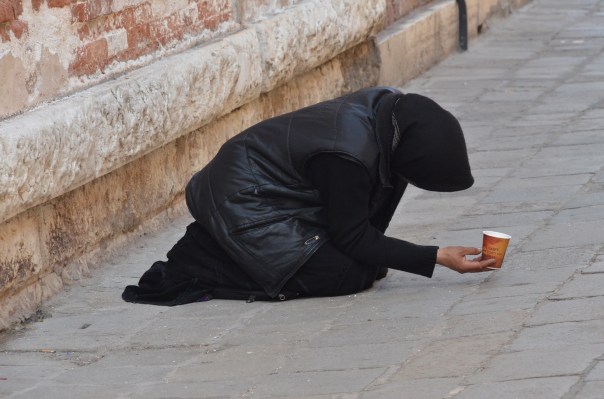
Our staff is currently reading a book called, “When Helping Hurts.” It’s an eye-opening journey to say the least. At the core is the idea that what we THINK is the best way to help someone who is struggling with poverty (material or otherwise) is to step in and provide immediate relief.
I mean, if you’re hungry, what you REALLY need is food, right? And if you’re about to have your electricity shut off, or your car repossessed, or to end up evicted from your apartment, then what you REALLY need is immediate relief. Right?
Maybe. And maybe not. The authors of this book point out that our goal in helping is to restore people to shalom, or to whole, healthy relationships with God, self, others and creation. That’s based on the following definition of what poverty really is:
Poverty isn’t just a lack of material things – it’s rooted in broken relationships with God, self, others, and the rest of creation. We were created to glorify God, reflect His image, love one another, and steward the rest of creation. But the fall and sin marred what God originally created. As a result, none of us are experiencing the fullness of what God intended for us. (Bryant Myers, Walking With the Poor)
In some cases immediate relief is indeed called for. But other times the need is for rehabilitation, and (most often) development. Those two are harder, longer, and less immediately satisfying when we want to feel good about ourselves. It’s the difference between doing things FOR someone, versus doing things WITH them.
An example from the world of substance abuse goes like this. Person struggles with addiction. They find themselves in a desperate situation. They cry out for help. Compassionate friends/family rescue them (provide immediate relief). Cycle repeats endlessly. What’s needed is a different kind of help. One that takes time, energy, relationship investment, and hard work.
Now when a storm knocks out your electricity or floods your home, you need immediate relief. But what about when your decisions over the last five years have eroded your ability to pay your bills? Is your real need for relief (which may simply kick the can of pain down the road a block or two), or is it for rehabilitation and development? Is this a real crisis, or a bigger pattern that needs to be addressed? There’s no simple answer, but that’s kinda the point. It requires careful consideration, and often significant time investment.
On top of this is the problem that those with resources who like to generously help others (a.k.a. immediate relief) can inadvertently start to take on a “god complex,” while simultaneously degrading the dignity of the person whom they’re trying to help. How much better if the person needing help was developed to a point where they had the confidence and dignity to provide for themselves, and/or their family?
Why am I bringing all this up? Because as followers of Christ we’re called to love and serve those in need. (E.g. the Good Samaritan.) But sometimes we can think we’re helping when in reality we’re making things worse.
So the next time you’re invited to help, you may want to stop and ask, “Does this person need relief, or rehabilitation, or development?” Then ask yourself if you’re willing and able to provide what’s really needed.
-Pastor Mark
Walking in the immigrant’s shoes
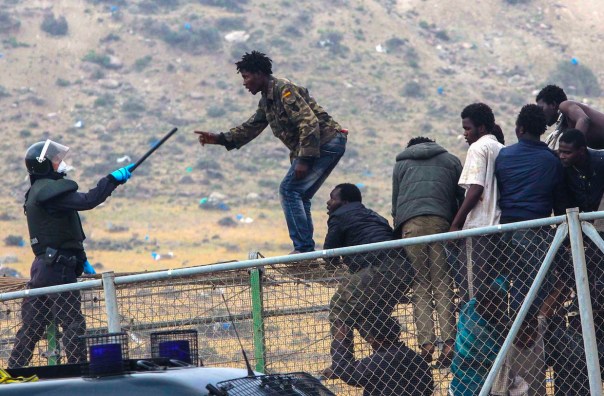 One of the issues that’s captured the attention of our nation (and others) is that of immigrants. But if anyone should see this differently it’s the followers of Jesus!
The water-cooler conversation is typically framed from the perspective of the “native born.” (Yes, I recognize the indignation that Native Americans feel at this point). Yet to follow Jesus is to become part of a new kingdom community, one that is not “from here” as we discussed last Sunday. (check out the podcast if you missed it)
And it couldn’t be more clear than from the words of Peter, the leader of the early church.
Live out your time as foreigners here in reverent fear. (1 Peter 1:17)
Live as foreigners, aliens, strangers here. What does that mean?
- Respect those who are “natives” but don’t think you have to become like them.
- Stop acting like their culture, values, and priorities are those of your people.
- Find ways to celebrate and embrace that which makes you different.
One of the misunderstood phrases that echoes through the early church is that of being “holy.” We sometimes think it’s people acting weird, being uptight and judgmental, and living with a long list of fun-squashing taboos.
In fact, being “holy” is simply acting like people who are not from here. People who represent a different kingdom/community. People who by their actions and lives are examples of a very different way to live…a genuinely human way, characterized by outrageous, sacrificial love and grace. People who look like, and live like Jesus himself.
To live that way will cause you to stand out…to look “different.” Because that’s the calling God has for everyone who joins in the ranks of the followers of Jesus. As Peter put it right before calling us “foreigners.”
But just as he who called you is holy [i.e. set apart for something different/special], so be holy in all you do. (1 Peter 1:15)
Act different. You’re not “from here.” You’re the advance guard of a revolutionary community of grace, led by Jesus, and empowered by the Holy Spirit of God himself.
So when you think of immigrants, it might be helpful to start thinking LIKE an immigrant. Because if you’re a follower of Jesus, that’s exactly what you are. Walking in immigrant shoes.
-Pastor Mark, immigrant
Need someone else to vote for?
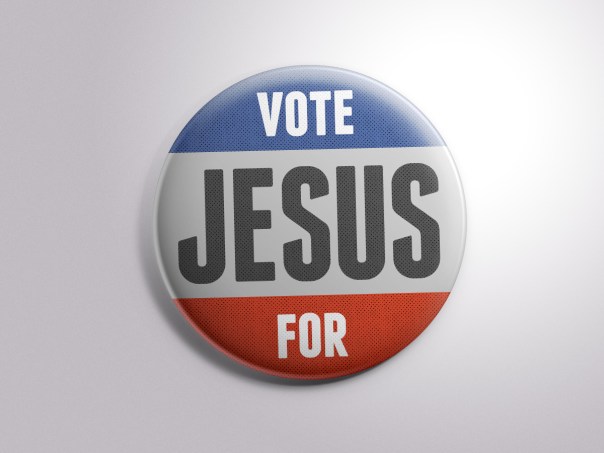 Are you underwhelmed by the election year options? Are you ready for something different?
For the next two months we’re going to figure out what it looks like to vote for an entirely different candidate. And we’re going to discover what life would look like if we would take that bold step in our own “ballot box.” Are you interested?
Then join us starting this Sunday, October 9th, for our series, “Vote for Jesus.” And lest you think this is all about whether you’re Democrat, Independent, or Republican, let me assure you we’re going to make all of us uncomfortable. Because the challenge is not just to vote for Jesus in one “election,” but in ALL the elections. That includes voting for Jesus in important roles such as:
- Your Marriage & Family Counselor
- Your Financial Advisor
- Your Community Activist
- Your Professor
- Your BFF or Confidant
- Your Spiritual MMA Champ
- Your Life Coach
And if you want to know how to regain some sanity in the current mud-slinging, name-calling, finger-pointing, nationally-embarrassing election cycle, consider this powerful antidote from a wise and influential pastor in Queens.
http://www.emotionallyhealthy.org/the-school-of-discretion/
Remember to keep praying, and “turning bodies into neighbors” this week!
-Pastor Mark
Be careful what you pray for…
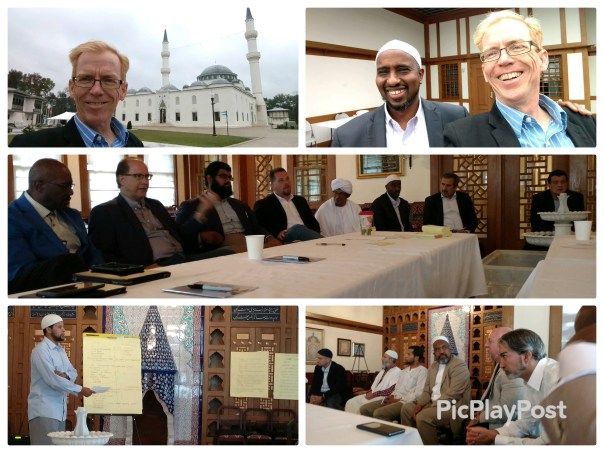
Last week I wrote about turning “bodies into neighbors.” It was a phrase from our Sunday morning conversation about focus on mission, and the call to love our neighbors. Like some of you, I started praying. Then this happened.
I spent the better part of three days this week at a small gathering of evangelical pastors and Muslim imams. The purpose was to begin to change the environment locally, and globally between these two dominant faiths. And along the way, God began to change bodies into neighbors.
Not only did I meet some courageous, like-minded pastors in the DC area (including one who has spoken powerfully about the racial tensions currently bubbling over in our country), but I met several imams, a brilliant young Muslim scholar, and a sheikh who is one of the top Muslim jurists in this country. And under the visionary leadership of Pastor Bob Roberts of Northwood Church in Dallas, we all began to build friendships, untangle perceptions, and ask the questions nobody ever asks. While all this was going on, something else was happening.
God was turning bodies into neighbors. I realized that despite living in such a diverse community, I had no relationship with any Muslims. Nor any conversations. And it’s hard to love those you don’t know. But God is changing that.
Which raises questions for all of us about loving our neighbors:
- Can you love someone who has a different faith system?
- Can you stand up for their rights to believe and practice their faith?
- Can you partner with them on making a difference in our communities?
- Can you be friends even if the other person never changes their religious beliefs to match yours?
- Would Jesus hang out with those who didn’t agree with him?
The retreat was just the beginning. But it was a powerful example of how God answers our prayers. Specifically, our prayers to turn bodies into neighbors.
How are you praying?
-Pastor Mark
Turning bodies into neighbors

Did you miss it? Did you miss the theme we are focused on this year? We want the HOPE of Christ to be more than a slogan or an insider experience. We want to ignite the HOPE of Christ throughout our neighborhoods and throughout the nations.
(If you missed last week’s message, check it out here.)
It starts with neighborhoods. And neighborhoods are made up of neighbors. But too often we don’t view people as neighbors. They’re simply bodies. Bodies that live across the street, or in the apartment upstairs, or the dorm room down the hall. But Jesus tells his followers to “love your neighbor.” So we need to find a way to “turn bodies into neighbors.”
The best part is that ANY of us can do this.
- You don’t have to be a people person to do this.
- You don’t have to be a religious person to do this.
- You don’t have to be an organized person to do this.
- It doesn’t matter what your country, culture, or color is.
- It doesn’t matter what your zip code or your net worth is.
- It doesn’t matter what your BMI or your IQ is.
- It doesn’t matter what your marital status or your legal status is.
It’s as simple as filling in the grid with the names of the eight people who live closest to your residence.

Pray that you’d get to know their names if you don’t already.It doesn’t matter if you live in a dorm, a single family house, an apartment, condo, townhouse or McMansion. There are people who are close to your residence when you lay your head down to sleep each night. Write down their names (or whatever nickname you’ve given them because you don’t KNOW their name), and begin to pray.
- Pray that God will work in their life this year.
- Pray that they will experience God’s blessing.
- Pray that they’ll experience the H.O.P.E. of Christ.
- Pray that you would be able to extend the H.O.P.E. of Christ in some tangible way.
- Pray that they would come to see God as their loving heavenly Father.
That’s it. Pray. Ideally every day, but at least once a week. It’s a practical, powerful way to ignite the HOPE of Christ from neighborhoods to nations. And then watch to see how God begins to change you, your neighbors, and your community. Are you in?
-Pastor Mark
Sit, Stand, Kneel…what we’re missing
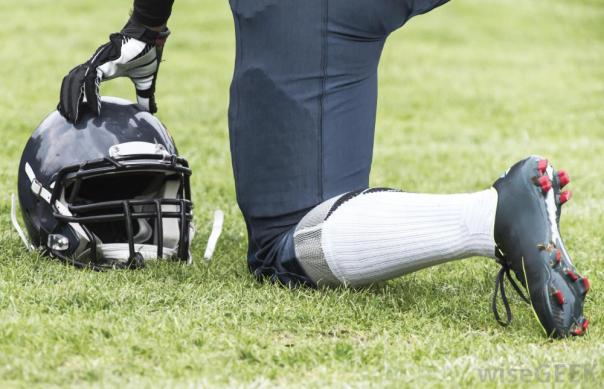
You can’t care about others and not notice the recent controversy that was started in the NFL and has now spread to other groups much closer to home [into homes and offices and social media]. What began as one athlete’s attempt to bring attention to a problem our country is wrestling with [the inequities of justice], has blossomed into a whole different controversy.
[This blog was originally posted in September 2016. Minor edits are noted.]
If you listen to the loudest voices right now, you’d think the most important issue is whether one should stand, sit, kneel, etc. during the playing of our national anthem. And as a former Marine, a citizen of this country, and someone who was raised to respect traditions, I can understand the view of those who are indignant at this gesture.
As a pastor who listens to and cares for people who don’t share my experiences of country, culture, and color, I also understand the frustration of feeling marginalized, oppressed, overlooked, and worse. That frustration would be enough to prompt any of us to boil over into action.
For reference sake, consider this: What is the proper posture to take when addressing God in prayer? If anyone deserves our respect it’s God. So is it better to stand? Or to sit? Or to kneel? Or even lie prostrate on the ground? Interestingly, the Bible would acknowledge ALL of these as appropriate ways to approach the Creator of the universe. And chances are you’ve practiced all of them. Something to think about as we ponder how to show respect.
But here’s what I think is easy to miss. While many argue about the proper body position during the song, we’re missing the real discussion. And that is, what are we to do about the sorry state of race relations and racial tension in our country? Do we care about it?
It’s a deep and pernicious problem, with roots running into every aspect of our society. This problem has defied decades of efforts to eradicate and resolve it. But THIS is the problem that needs our attention, much more than what we do during the playing of the anthem. I mentioned in this blog a few weeks back [last year] that how we think about others has enormous implications for our faith. That includes those who look different than me. Do we see each person as having infinite value? God does.
Ultimately the solution lies beyond the reach of governments and social programs, as useful as those can be. The solution is a heart one. What’s required is the work of God in human hearts.
At Seneca Creek we’ve talked over and over about igniting the H.O.P.E. of Christ. The “P” in HOPE is for “promoting reconciliation.” That’s not just reconciliation with God. That’s reconciliation with others. Our neighbors. And you can’t legislate that.
But God can initiate that. And as a church, we can walk together towards reconciliation. A “body of Christ,” a family of brothers and sisters who are learning how be reconciled, learning how to bear one another’s burdens, learning how to speak truth to one another, and learning how to replace the injustices in our fallen world with the beautiful justice of the kingdom of God.
If you want to learn more of how we do that, be sure to join us in our current series, “Focus.” [each Sunday morning]. And feel free to add your (polite) comments below.
-Pastor Mark
P. S. Here’s some more food for thought from a respected voice in the church today.
What are you waiting for?

Last year we launched Rooted. And almost 200 people have taken the plunge. Their lives have changed. Now it’s your turn. What are you waiting for? Check out these stories.
Debbie’s story
Jeremy & Shannon’s stories
Lance’s story
Last week I shared some of the Rooted experience comments from people just like you at Seneca Creek. Check out their stories here.
You can get the details, and register online right now by clicking here. What are you waiting for?
Then join us this Sunday as we launch our new series, “Focus.” That’s the challenge we face in a world of relentless messages and demands and distractions. I look forward to being part of the journey with you as we plunge into this new season.
– Pastor Mark
Are you going back to school?

The pictures on social media this week were awesome. And the comments somewhat predictable. “So proud…Where did the time go?… They grow up so fast…” As everyone from preschoolers to college freshmen embarks on their new educational journey, I’m wondering about YOUR back to school picture.
And I’m wondering about mine, too. Let’s face it, once you have your diploma/degree in hand it’s easy to slip into a routine that carefully avoids new learning. Life can become one week after another of the same faces, same places, and same beliefs and behavior.
But the students heading off to school…they’ve got something to teach the rest of us. Their example teaches us that this is the perfect time to embark on a new season of learning and growing.
- Maybe it’s time to finally put some research into your relationships that have become frayed and faded.
- Maybe it’s time to learn some new ways of managing your finances.
- Maybe this is the year you enroll in the school of “taking care of my body.”
- And maybe (hopefully) this is finally the time that you leave behind the spiritual wilderness and boldly step into a new chapter of your relationship with your Heavenly Father.
One year ago we rolled out an exciting opportunity to help you do just that. It’s called the Rooted Experience, and it’s a powerful way to connect with God, connect with the church, and connect with your purpose. I’m proud to announce that almost 200 people at Seneca Creek…people just like you…have already “enrolled and graduated” from that experience! Listen to some of their comments about their time in Rooted:
- It drew us closer to God, our relationship with Him, actively getting involved in prayer & service. Brought greater depth of knowledge [and an] opportunity to open up and build beautiful relationships with people I’d never met before.
- I had the opportunity to spend more time in prayer, and work on my internal struggles.
- I became more focused on my relationship with God on a daily basis, connected with new people on a deeper level, and learned tremendously about myself through this experience.
- Rooted help me to see some blind spots I have.
- It opens your eyes that you are not the only one with problems. I learned a lot about myself, others, and God.
- I got to understand my purpose that God has for me
And perhaps even more exciting, listen to them describe the change in their lives in just ten weeks:
Before: Was filled with anxiety and the need to control
After: Am learning to let go and trust my heavenly Father
Before: Felt alone in church
After: Have a church family
Before: Self-centered, contentious, defensive
After: Walking in peace
Before: Would pray TO God not expecting to hear his voice
After: Pray WITH God hearing him speak to me
These are the stories of people like you who went back to school. Are you ready to go back to school? I’d like to invite you to enroll today for the Fall Rooted Experience. You can click here for registration and information. Or you can stop by the table in the lobby on Sunday and talk with one of our friendly, knowledgeable volunteers. But whatever you do, don’t delay. We launch this next session on Tuesday, September 13th. Just in time for you to go “back to school.”
Hope to see you then.
-Pastor Mark
 Living in faith, hope and Love